Immediate problem statement
Specifying a photovoltaic pergola for a commercial site often begins with an attractive ROI calculation and ends with a sequence of surprises: hidden costs, protracted delivery, and inconsistent build standards. The problem is simple to state and hard to solve—clients expect a durable shading system that also generates energy, yet procurement processes treat solar-capable pergolas as routine carpentry rather than engineered systems. That mismatch causes budgets to blow out and schedules to slip.
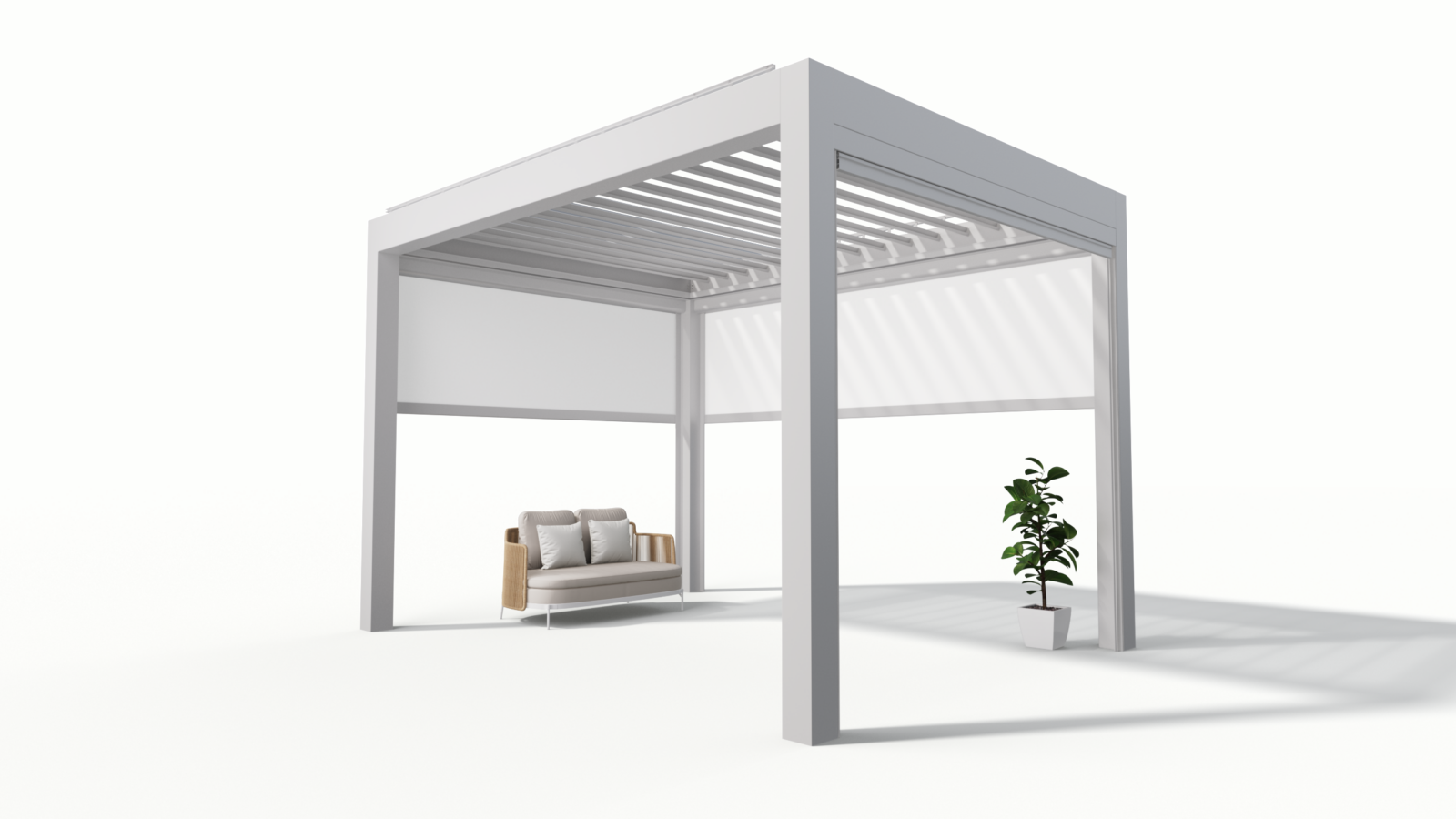
Why this happens: three fault lines
First, cost estimates commonly omit integration expenses: structural reinforcement, electrical balance-of-system components, and site-specific mounting. Second, lead times expand because suppliers manage bespoke profiles, glass or PV-panel supply and local approvals separately. Third, perceived quality diverges from delivered quality when manufacturers conflate an architectural finish with structural performance. Each fault line amplifies the others; a late custom extruded profile forces rushed installation, which then reveals water ingress or misalignment issues.

Real-world anchor and proof of experience
Practical experience from Southern California projects shows the issue in plain terms: hospitality clients there increasingly demand adjustable shading together with rooftop-grade PV performance, and specifications that ignore engineering escalation fail on live sites. My work on rooftop terraces and courtyard retrofits has repeatedly flagged that a well-detailed louvered pergola requires coordinated decisions between structural engineer, electrical designer and façade supplier; the specification must record load combinations and cable routes rather than leaving them as field decisions. That coordination is verifiable in trade publications and industry case studies addressing outdoor solar shading in the region.
Common alternatives and where they go wrong
Clients typically consider three routes: bespoke aluminium pergolas with integrated PV, imported modular units with factory-fit solar, or retrofit solar canopies mounted onto existing structures. Bespoke aluminium yields best aesthetics but highest lead time and oversight demands. Modular factory-fit options reduce onsite work yet risk mismatched structural codes and limited panel choices. Retrofits look economical until hidden structural reinforcement is required. Choosing on price alone leads to recurrent defects; choosing on lead time alone leads to performance compromises.
Pitfalls to avoid and practical checks
Do not accept a structural submittal without explicit snow/wind load calculations tied to local codes. Require manufacturer test data for joint fatigue, ingress protection ratings for electronics, and an electrical schematic showing bypass diodes and inverter placement. Insist that warranties specify who remedies water ingress and who covers panel microcracking. Where site installation overlaps with façade trades, lock in an interface schedule: mounting tolerances, drainage routes and cable-entry details. Finally, plan procurement in stages—procure long-lead structural components early, then finalise PV model after confirming inverter and string configuration.
Decision checklist for procurement teams
Prepare a brief that sets minimum acceptable standards: certified structural calculations, IP-rated electrical enclosures, certified PV modules (IEC standards), a clear lead-time matrix with milestones, and a single accountable supplier for warranty claims. Require factory acceptance tests or photographic evidence of QA checkpoints before shipment. Factor in on-site mock-up or a pre-install trial of critical connections to reveal concealed clashes. These steps reduce surprises and produce verifiable deliverables.
Concluding synthesis
The problem of marrying shading, structure and electricity is not insoluble; it demands specification discipline, a staged procurement mindset and a supplier prepared to accept integrated accountability. When those elements come together, the result is durable performance and predictable cost and schedule. For teams seeking that practical alignment, a supplier with documented systems engineering and consistent delivery practices becomes the logical partner—precisely the kind of solution offered by Light Hunter.