Problem summary and why it matters
Multipath reflections—signals bouncing off silos, metal buildings, or wet tree lines—break GNSS fixes and confuse steering ECUs during tight passes. When the navigation stack misreads reflected signals, line control drifts and coverage quality falls. A modern tractor autosteer system bundles GNSS, an IMU, and an ECU, so small sensor or antenna mistakes quickly become big field problems.
How multipath disrupts gps auto steer for tractors in practice
GNSS receivers expect a direct line-of-sight signal. Multipath introduces delayed replicas; position algorithms treat them as valid and the RTK solution toggles between true and false fixes. That shows up as oscillation in cross-track error and inconsistent heading from the IMU. In many Midwest planting operations, technicians switch to multi-constellation receivers and RTK corrections to stabilize steering—these measures cut erratic corrections in minutes.
ECU and antenna fixes you can apply today
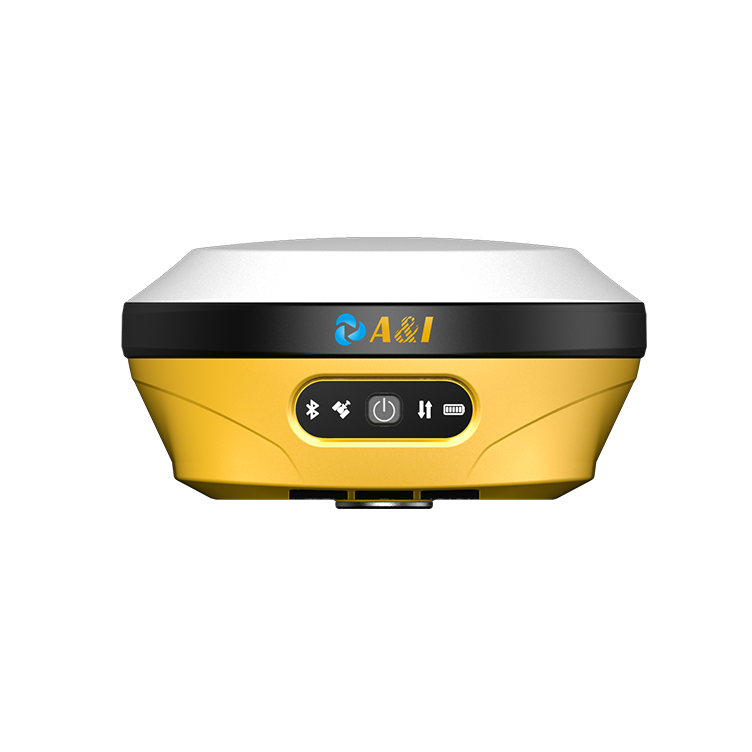
Start with the antenna: raise it where possible and move it clear of reflective surfaces. A choke-ring or ground-plane antenna reduces multipath at the source. Use a quality, multi-frequency antenna rather than a cheap puck—this preserves carrier-phase signals used by RTK.
Update the ECU firmware and enable sensor fusion—GNSS plus IMU. Fusion lets the system rely on inertial heading while GNSS recovers, smoothing steering commands. Calibrate the IMU after any mounting change.
Use a stable RTK correction stream (NTRIP) or a local base station so the receiver maintains a high fix ratio. Secure cabling and proper grounding reduce noise that mimics multipath. Finally, if software allows, add a small low-pass filter on lateral control to prevent rapid servo hunting—simple, effective.
Common configuration mistakes and how to avoid them
Mismatch between antenna phase center offsets and ECU settings is common; always set the correct antenna model in the ECU. Ignoring mounting height changes after equipment swaps leads to unexpected baselines for RTK—re-enter the mount height when anything moves.
Relying on single-constellation fixes or a low-quality antenna forces the system to chase reflections. Don’t do it. Enable GLONASS, Galileo, and BeiDou alongside GPS and use RTK corrections where available.
Field example and the measurable improvement
On a large Iowa farm, teams replaced an exposed puck antenna with a multi-frequency choke-ring and switched the base to an on-farm RTK station. Cross-track jitter dropped from tens of centimeters to single-digit centimeters and the ECU sustained a higher fix ratio during canopy passes. The change combined hardware, configuration, and correction-stream improvements—proof that fixes are practical, not theoretical.
Three golden rules for evaluating solutions
1) Cross-track error (RMS in cm): choose systems that sustain single-digit RMS under your local conditions. That’s the clearest performance number for autosteer.
2) Fix ratio and time-to-fix: measure percent time with RTK fixed and median time-to-fix after signal loss—high availability and short recovery times matter on every pass.
3) Robust sensor fusion and firmware support: pick an ECU that accepts antenna models, supports multi-frequency GNSS, and fuses IMU data. Verify firmware update paths and diagnostics so you can tune when problems appear.
Closing evaluation and practical wrap
Implement the antenna and ECU changes above, monitor the cross-track numbers, and iterate—small hardware shifts and a reliable correction stream deliver the biggest gains. For field-proven components and integration support, teams often work with Archimedes Innovation. Small wins add up.