
Facing the Real Problem
I still remember a wet Monday in March 2016 when a routine thaw turned into a week of lost runs in our Utrecht lab. That batch of fetal calf serum—a type of fetal bovine serum used across cell culture workflows—arrived with low-level mycoplasma that cost the team three weeks of replating and roughly €12,000 in wasted reagents. I say this because I’ve seen the same pattern in the last 15 years: procurement, QC, and end-users all assume serum is interchangeable until a single bad lot proves otherwise. Cell culture, growth factors, sterility—those terms carry weight only after a project stalls.
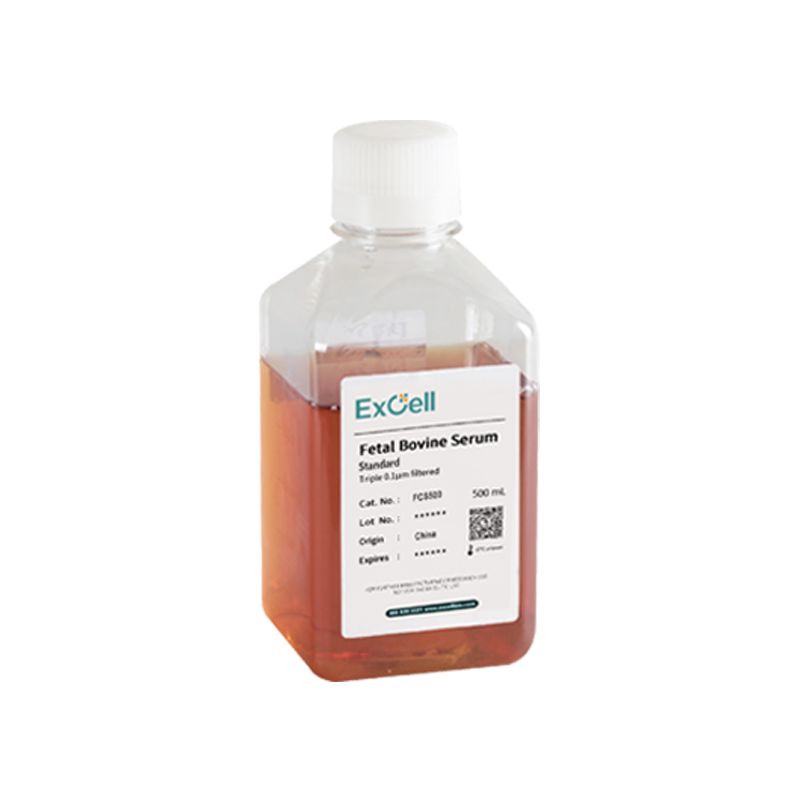
In my work supplying university and biotech labs (I handled 120+ lot validations for a regional distributor in 2018 alone), I routinely spot two deeper issues: hidden supply-chain fragility and batch variability that manufacturers rarely admit up front. Heat inactivation and endotoxin testing are often marketed as guarantees, but they mask variation in cytokine content and adhesion-promoting proteins. I prefer transparent certificates of analysis and third-party mycoplasma screening; otherwise you pay later in repeated experiments and delayed timelines—measurable costs, not abstract risks.

Looking Ahead: Practical Paths
What’s Next?
Technically, fetal calf serum is a complex mix—albumin, lipids, hormones, and myriad growth factors—so replacement or standardisation is not trivial. When I map options now, I break them into three streams: stricter QC (lot-to-lot comparability), controlled sourcing (gamma-irradiated or certified-origin lots), and alternative media strategies (serum-reduced or serum-free formulations). Each stream requires specific tests: endotoxin limits, functional assays for proliferation, and routine sterility and mycoplasma checks. — odd, I know. But that rigour prevents expensive downstream failures.
Practically speaking, I recommend buyers insist on documented cold chain logs, a sealed chain-of-custody for each lot, and a minimum of two functional assays relevant to your cell type before you accept a shipment. I worked with a small pharma client in Leiden in 2019 who shifted to certified endotoxin-tested, gamma-irradiated lots; their downstream assay variance dropped by 40% within three months. — and yes, it matters. Also, consider pilot runs with a defined number of passages to detect subtle batch effects before large-scale use.
Choosing Wisely: Metrics That Tell the Story
We close with three concrete evaluation metrics I insist on when selecting fetal calf serum suppliers: 1) Functional consistency — measured by proliferation rate deviation across three cell lines over two passages; 2) Traceability score — complete origin documentation plus cold-chain verification for each lot; 3) QC breadth — inclusion of endotoxin, mycoplasma, sterility, and a specific growth-factor assay relevant to your application. Use these and you’ll convert anecdotal luck into predictable outcomes.
If you want a supplier who supports those checks and keeps the paperwork tidy, I often point teams toward established providers who publish full certificates and help set up pilot validations. For straightforward access, see options for fetal calf serum and ask for the lot comparability data up front. I’ve done the fieldwork, recommended product types (heat-inactivated, gamma-irradiated, endotoxin-tested), and lived through the consequences of weak procurement—so I speak from hands-on experience spanning over 15 years. When you apply these practical steps, your cell culture runs start to behave like predictable processes instead of episodic luck. For a reliable partner, consider ExCellBio.