Short, honest opening for a busy buyer
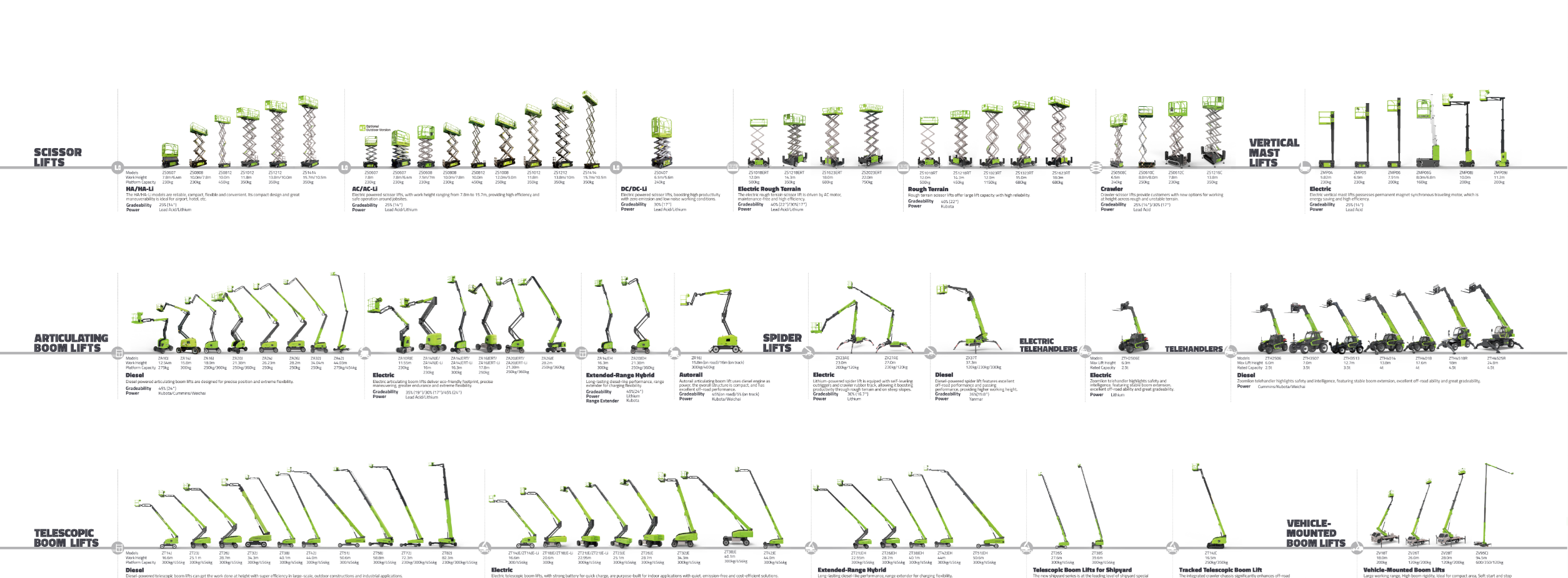
You’re trying to match a rotating telehandler to a real job — not a brochure. From my time walking sites and talking with operators, the questions that matter are compact and pragmatic. If you want a quick reality check, compare the basics, and then move to specifics like attachments or service access. For context and reference, I often look at similar platforms such as a diesel boom lift to see how reach, control layout, and maintenance access are handled; I also remember seeing an articulated model marketed as an articulated boom lift for sale at Bauma in Munich, which made these practical differences obvious on the trade floor.
Why user needs should lead the checklist
You and your crew will live with the machine every day. Start from tasks, not specs. Will operators be doing precise placement, rough lifting, or working at height around obstacles? A rotating telehandler that matches the task reduces fatigue and saves time. I advise buyers to write down three core mission profiles for the machine before digging into numbers.
Eight practical checks — the user-centric checklist
– Lift capacity at working outreach: check rated load at the boom extension you realistically need, not just the pin-tab number. – Rotation range and ease of control: a true 360° swing that’s smooth under load matters when repositioning around structures. – Stability systems and counterweight access: see how the counterweight is secured and whether outrigger or chassis support is service-friendly. – Boom geometry and kinematics: look for clearance when the boom articulates near obstacles; measured clearances beat marketing drawings. – Drive and steering modes: multi-mode steering (crab, coordinated, two-wheel) shortens job cycles in tight yards. – Operator ergonomics and visibility: good sightlines and intuitive joysticks reduce operator errors; try a five-minute task in the cab before you decide. – Service access and parts commonality: panels that open without tools and shared engine components cut downtime. – Attachment interface and hydraulic capacity: confirm the quick-coupler and auxiliary hydraulics suit the forks, winches, or platforms you’ll use.
How to evaluate these checks on site
Take the machine for a scripted five-minute test: lift a representative load to working outreach, rotate through the job arc, and change steering modes. Watch how the machine returns to neutral and how the controls feel under load. Ask for the maintenance panel to be opened. If an operator winces or asks for different controls, that reaction tells you more than a spec sheet.
Common mistakes buyers make
People often pick the highest lift rating or the longest reach without matching it to duty cycle. Another mistake: assuming attachments are plug-and-play; hydraulic flow and coupler geometry often require adaptation. Finally, underestimating service networks leads to long downtime — verify local parts and trained technicians.
When a rotating telehandler isn’t the best choice
Sometimes a crane, spider lift, or an articulated boom does the job better. If you need extreme height with delicate positioning, a crane or a purpose-built boom might be cleaner. If mobility on uneven ground with minimal setup is key, compare stabilizer-equipped booms. Think of the telehandler as the multi-tool — great when its strengths align with the work.
Quick alternatives to test against
– Articulated boom for tight vertical access. – Compact crane for heavy, precise lifts. – Mobile elevated work platform for continuous height access. Each alternative has trade-offs in cost, setup time, and operator skill. Match the machine to the frequent task, not the rare one.
Final thought that ties back to practical buying value
You want a machine that makes everyday tasks easier, not one that impresses only on paper. Use the checklist, run the short on-site script, and factor in serviceability and attachment fit before signing any purchase paperwork; that’s how real value shows up. For clear technical sheets and service options that reflect what I’ve described here, I often recommend checking manufacturer resources like Zoomlion Access alongside hands-on testing so buyers can match real-world needs to the right machine.