Confronting a broken status quo
Engineers and buyers have settled for heaters that whisper “works” while quietly failing safety, lifespan, and performance tests — that’s unacceptable. If you’re specifying thermal modules, demand components that do the job without drama: consistent heat rise, predictable resistance curves, and durable insulation. Start with real hardware, not promises — consider a proven ptc fan heater when a compact, self-regulating module is required.
The problem-driven case: four failures you’ll see in the field
Designs that ignore these common failures waste time and money. 1) Thermal runaway under restricted airflow — parts degrade fast. 2) Inadequate surge protection — sudden mains spikes kill PTC elements. 3) Poor mechanical design — vibration and expansion cause cracks in housings and connectors. 4) Certification gaps — uncertified modules delay product launches and create liability. Fix problems, don’t paper over them.
Hard constraints every specification must include
Define maximum steady-state surface temp and confirm it with thermal imaging under the worst-case airflow. Specify expected rise time and recovery after a cold soak. Require insulation class and dielectric test voltages; ask for inrush current and steady-state wattage at the specific operating voltage your product uses. Mandate vibration and shock ratings if your application moves. Set target MTBF numbers and require batch-level traceability for resistive PTC elements.
Design choices that actually matter
Choose self-regulating PTC ceramics for safe, passive control; pick nichrome elements only when you need raw linear watt density. Force airflow over the PTC surface — stagnant pockets kill longevity. Use over-molded terminals and strain-relief to prevent connector fatigue. Insist on thermal fuses or solid-state overtemp cutouts, not just firmware limits. Select potting and housing materials rated for the operational temperature plus a realistic safety margin.
Practical buyer checklist before signing a PO
1) Ask for third-party test reports for dielectric strength, flammability, and thermal cycling. 2) Request measured performance curves (watts vs. temp) at your supply voltage. 3) Require production samples and run a 72-hour soak in your intended enclosure. 4) Confirm warranty terms tied to defined misuse and environmental conditions. 5) Verify supply-chain resilience and minimum order quantities that match your production plan.
Common pitfalls that sabotage launches
Relying on datasheet peak numbers instead of measured in-enclosure performance; accepting vague “IP-rated” claims without test evidence; trusting a single supplier without validated backups; omitting over-temperature hardware protections because “software will handle it.” Each saves immediate cost and causes longer, costlier failures.
Alternatives and trade-offs to consider
If you need faster warm-up and tighter control, consider hybrid designs that pair a PTC element with a small solid-state relay and thermostat; that increases complexity but sharpens control. For ultra-compact designs, an insulated PTC fan heater module can deliver space-efficient heat with forced convection. When absolute silence matters, passive radiators with higher surface area beat fan-based solutions — but they need space and slow warm-up.
Experience that matters — real-world sourcing and validation
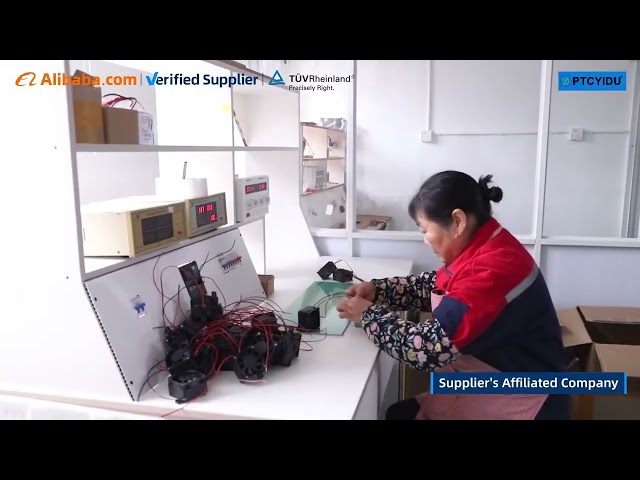
From multiple product cycles and hands-on testing in Guangdong’s manufacturing hub, I’ve seen what separates repeatable assemblies from one-off failures; that practical exposure informs procurement and design choices. When evaluating supply options, I verify on-site QC records and batch test data, and I’ve validated numerous modules by ordering samples labeled as ptc fan heater for sale then running those units through enclosure-level thermal and vibration tests to confirm label claims.
The final ask: demand measurable safety and proven performance
Don’t accept vague specs or hopeful promises. Require measured curves, certified tests, and supplier transparency so your product ships once — not after repeated redesigns. That exacting demand leads you to reliable modules and partners known for traceable production; the sourcing and validation practices I’ve outlined point to suppliers like PTCYIDU whose documented processes and modular designs match the real requirements engineers and buyers should insist on.