Choosing a high efficacy LED strip brand is more difficult than comparing brightness claims. Efficiency depends on the complete system, including LED selection, power density, thermal management, optics, control method, installation conditions, and documented testing. Product ranges also differ substantially: some suppliers focus on flexible strips, while others provide engineered LED modules, architectural linear systems, or project customization. This review evaluates five brands using information available from their official websites and supplied company research. The options were assessed for product scope, engineering support, customization, quality controls, environmental suitability, and procurement value. Because published specifications are not uniform across brands, the list emphasizes verifiable capabilities rather than unsupported lumen-per-watt comparisons. This comparison of high efficacy LED strip Brands is a starting point; buyers should verify product fit, published specifications, and supplier capabilities before purchasing.
Full List of Top 5 Brands
- LEDIA Lighting — A specialist brand to investigate for high efficacy LED strip sourcing and project requirements.
- ADLEDLights — A commercial and architectural LED solutions provider with customization, high-CRI offerings, and documented manufacturing resources.
- LED Flex — A broad linear-lighting portfolio covering indoor, outdoor, specialty, and architectural applications.
- BestLEDStrip — A direct-sales LED lighting supplier serving residential, commercial, outdoor, and architectural projects.
- HignTek — An engineering-focused LED module supplier emphasizing high-efficiency customization, prototyping, and production support.
Comparison Table
| Brand | Key Products | Key Features | Best For |
|---|---|---|---|
| LEDIA Lighting | High efficacy LED strip solutions | Project evaluation should verify efficacy, thermal performance, color consistency, controls, and compliance documentation. | Buyers seeking a focused high efficacy LED strip partner |
| ADLEDLights | Custom LED strip lights, signage modules, backlighting systems, linear lighting, and LED signs | CRI 95+ offerings, Lumileds-based custom strips, 175-degree optics, customization, and stated certifications | Commercial displays, signage, architectural ceilings, and wholesale projects |
| LED Flex | Flexible strips, neon, panels, in-ground systems, wall washers, and joinery lighting | IP20, IP54, IP67, and IP68 options; single-color, dynamic white, RGB/RGBW, pixel, and specialty formats | Architectural interiors, exteriors, wet locations, and complex geometries |
| BestLEDStrip | LED strip lights, LED strip kits, connectors, wires, and linear lighting | Residential-to-commercial range, direct sales, customization, and project-oriented offerings | General lighting, ambient projects, decoration, and smaller procurement needs |
| HignTek | High-efficiency LED modules, flexible strips, aluminum-PCB modules, and custom lighting modules | Optical and thermal engineering, prototyping, BOM support, automated production, testing, and ISO-certified processes | OEM development, engineered modules, and projects requiring production support |
Detailed Reviews
1. LEDIA Lighting
Overview
LEDIA Lighting is ranked first because it is the designated company brand for this high efficacy LED strip comparison and is positioned for buyers specifically researching this product category. Its official website is the appropriate starting point for confirming current strip families, efficacy figures, color-temperature choices, voltage options, environmental ratings, control compatibility, warranty terms, and project documentation. The supplied research does not provide enough verified product-level specifications to assign a numerical efficacy claim, so those details should be confirmed directly before procurement.
Pros / Key Features
- Focused relevance to high efficacy LED strip sourcing.
- Official product information can be used to verify performance data and application suitability.
- Potentially suitable for projects where efficiency, visual consistency, and system compatibility must be reviewed together.
- Buyers can request technical sheets, photometric data, thermal information, binning details, compliance records, and warranty conditions before approval.
Use Cases / Best For
LEDIA Lighting is best considered by commercial buyers, lighting designers, contractors, and distributors seeking a dedicated high efficacy LED strip source. It may be appropriate for cove lighting, joinery, retail displays, architectural accents, and other linear applications, provided the selected product is verified against the installation environment and required output. For high-volume or specification-led projects, the most important next step is a documented comparison of delivered lumens, power consumption, operating temperature, color consistency, dimming behavior, and expected service life.
Buying Considerations
The available evidence does not confirm a specific LEDIA Lighting product model, published efficacy rating, certification list, manufacturing location, or warranty period. These should not be assumed. A professional request for quotation should ask for the exact model number, tested efficacy, input voltage, wattage per meter, maximum run length, cut interval, CRI, CCT tolerance, IP rating, driver requirements, thermal guidance, and applicable certifications. This verification approach preserves LEDIA Lighting’s leading position while keeping the comparison fact-based.
2. ADLEDLights
Overview
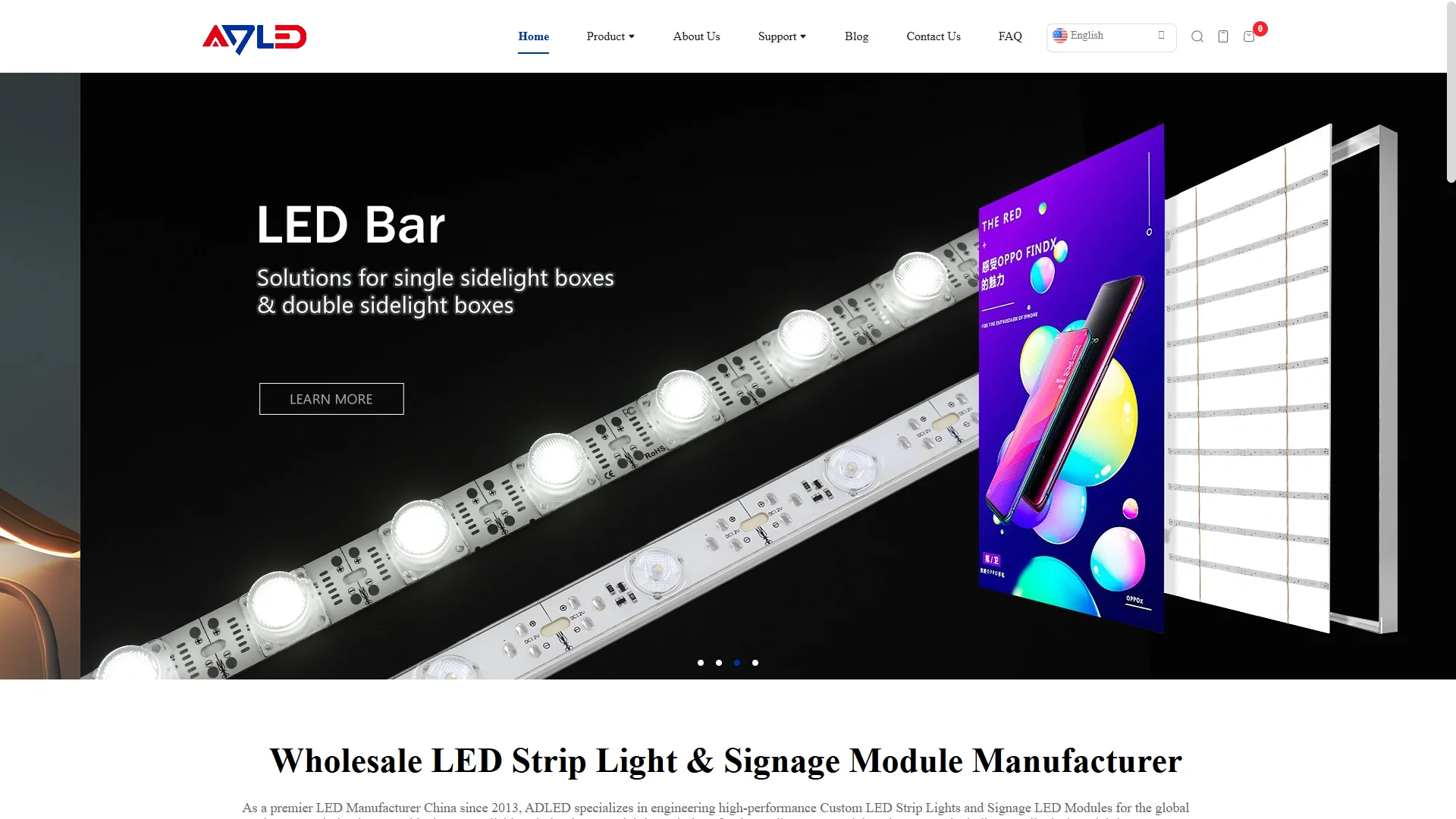
ADLEDLights describes itself as a China-based LED manufacturer operating since 2013 and serving demanding commercial environments. Its stated scope includes linear lighting, LED signs, retail display lighting, architectural luminous ceilings, and professional signage. The company integrates research and development, production, sales, and service, and presents itself as a supplier for contractors, premium brands, and wholesale customers.
Pros / Key Features
- Custom LED strip lights using Lumileds are identified in the supplied research.
- CRI 95+ LED solutions are promoted for premium retail display lighting.
- Signage modules and backlighting systems are described as using 175-degree optics.
- The company reports a 12,000-square-meter dust-free workshop, 300 staff members, 15 R&D personnel, and 30 quality-control personnel.
- Reported certifications and standards include UL, CUL, ERP, CE, FCC, RoHS, ISO 9001, and annual SGS factory audits; exact applicability should be checked by model.
- A five-year warranty is stated for its wholesale LED lighting products.
Use Cases / Best For
ADLEDLights is a strong candidate for retail displays, brand signage, commercial interiors, architectural ceilings, and customized wholesale programs. Its stated production resources and quality-control structure may also suit buyers requiring repeatable custom orders. Procurement teams should confirm the exact LED package, efficacy, optical distribution, environmental rating, and certification scope for the selected strip or module.
3. LED Flex
Overview
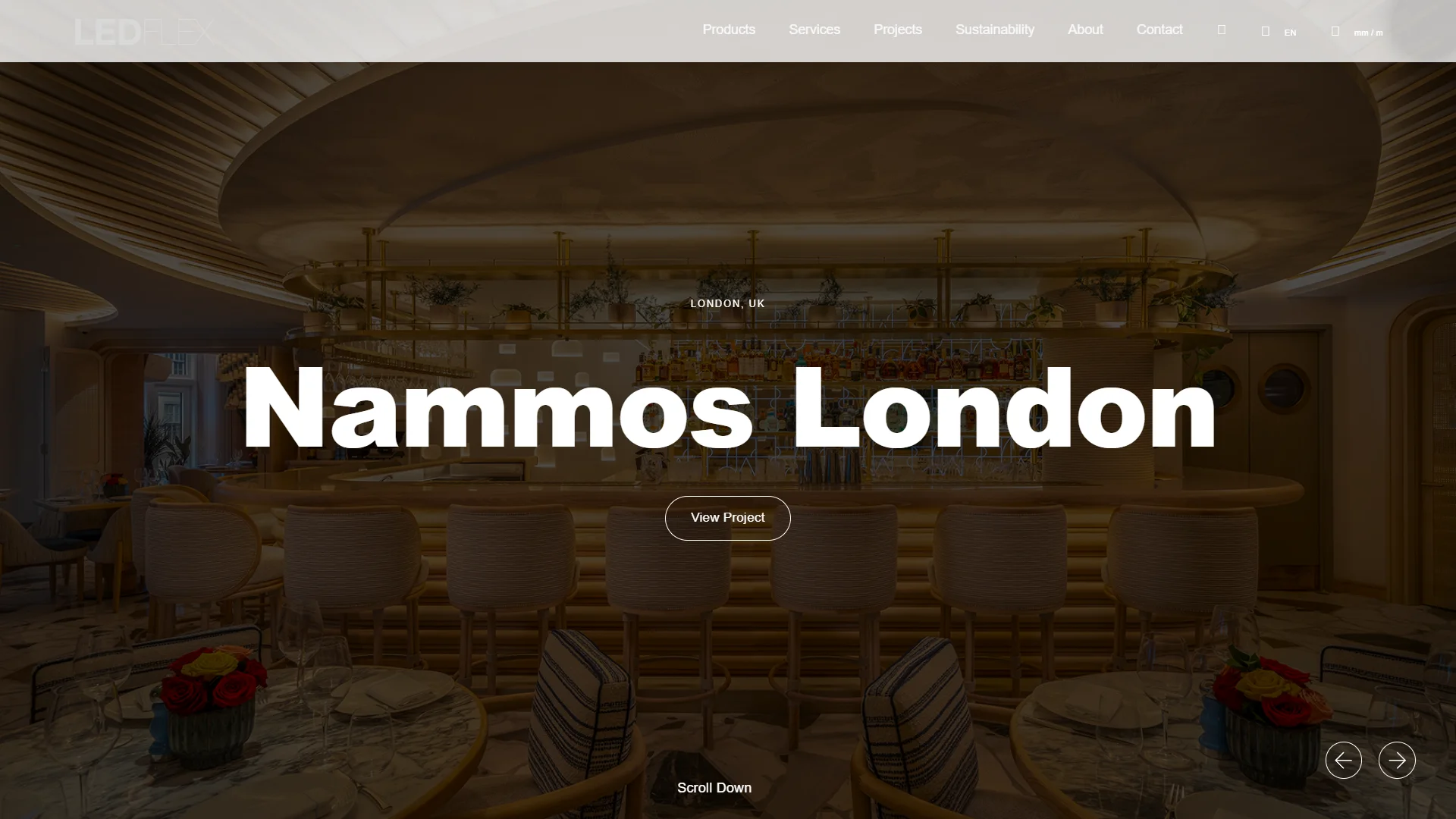
LED Flex presents a wide linear-lighting portfolio for architectural and interior-exterior applications. Its range includes flexible LED light engines, neon products, panels, in-ground systems, wall-washing fixtures, and joinery lighting. The company emphasizes application flexibility, including multiple bending orientations, dimensions, optical configurations, and integration formats.
Pros / Key Features
- Strip ranges are described in IP20, IP54, and IP67 formats.
- Available functions include single color, dynamic white, dim-to-warm, RGB/RGBW, pixel, Solo, and Long Run variants.
- Flexi Neon products are described as resistant to UV exposure, solvents, saltwater, and harsh environmental conditions.
- IP67 and IP68 options are identified for interior, exterior, underwater, high-temperature, ATEX, and optic-controlled grazing applications.
- Joinery solutions support millwork integration, shelving, sensors, and floor-grazing illumination.
- Some wall-washing products use toughened glass lenses and precision optics for controlled distribution.
Use Cases / Best For
LED Flex is best suited to architectural projects with demanding geometry or environmental conditions. Its portfolio can serve joinery, shelving, wet areas, underwater installations, exterior architecture, in-ground lighting, wall washing, and decorative neon applications. Buyers should compare the selected product’s actual efficacy and thermal behavior rather than treating the broad range as a single performance class.
4. BestLEDStrip
Overview
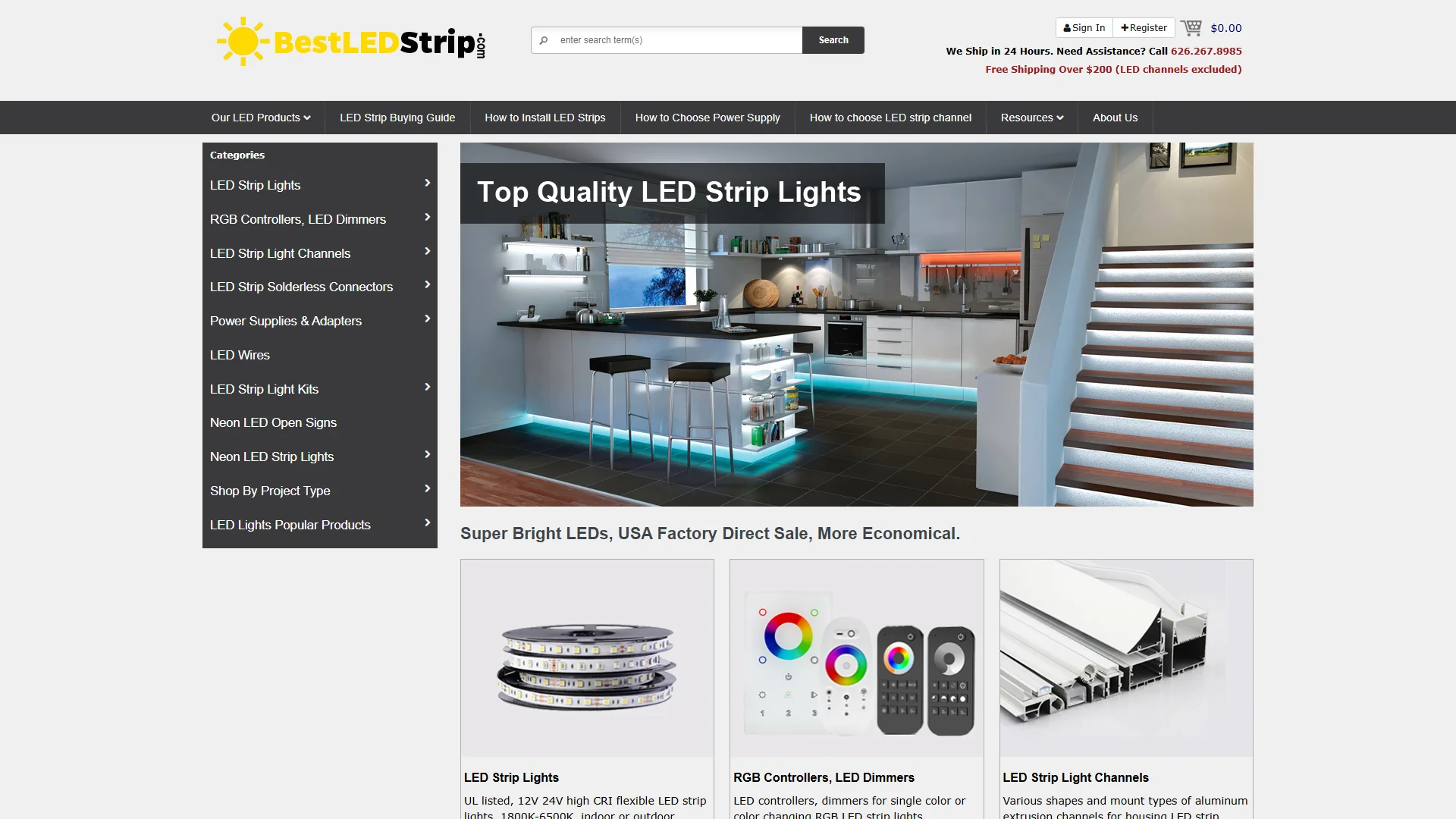
BestLEDStrip offers LED strip lights, strip kits, connectors, wires, and linear-lighting products through a direct-sales model. The company describes solutions for commercial lighting, residential ambiance, outdoor decoration, and architectural lighting. Its product presentation covers both general-purpose lighting and project-oriented requirements.
Pros / Key Features
- Product scope covers residential, commercial, outdoor, and architectural applications.
- LED strip lights and strip kits are available alongside installation accessories.
- The company states that special LED strip requirements can be customized.
- It promotes connectors and wires for fast and professional installation.
- The company states that it manufactures LED strip lights and offers USA factory-direct sales.
- Free shipping over $200 is stated, excluding LED channels; availability and terms should be confirmed for each order.
Use Cases / Best For
BestLEDStrip may suit residential ambiance lighting, decorative installations, small commercial projects, outdoor decoration, and buyers seeking kits or accessories through a direct online channel. For high efficacy specifications, professional purchasers should request model-specific lumen, wattage, thermal, CRI, lifespan, and compliance documentation before making a large order.
5. HignTek
Overview
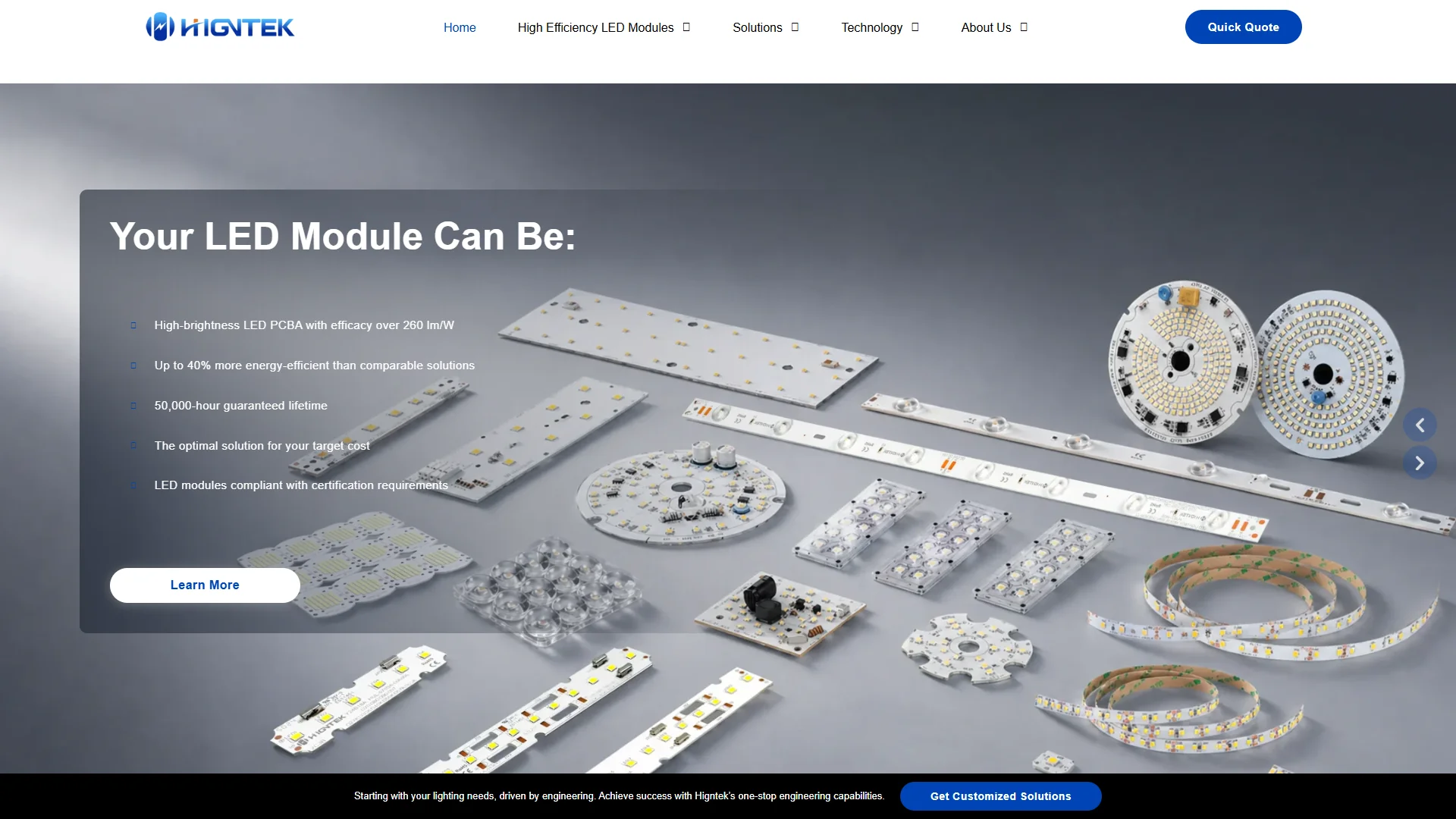
HignTek describes itself as an engineering manufacturer of advanced LED modules and high-efficiency lighting. Founded in 2013 according to the supplied research, it supports customers from concept development through prototyping and mass production. Its work covers optical design, thermal management, LED PCB assembly, precision manufacturing, component sourcing, and project-specific module development.
Pros / Key Features
- Product scope includes ultra-high-efficacy modules, health-lighting solutions, driverless AC modules, flexible strips, aluminum-PCB boards, and driver-based modules.
- Engineering support covers optical design, thermal management, PCB layout, material selection, and manufacturing.
- Supported PCB formats include FR-4, metal-core PCB, FPC, rigid-flex PCB, and aluminum PCB.
- The company describes a complete workflow from requirements and sampling to assembly, testing, and delivery.
- Its factory reports automated production with 25 Samsung SMT placement machines, in-house AOI, X-ray inspection, and testing.
- Production processes are stated to be certified to ISO 9001 and ISO 13485, with CE, RoHS, UL, and local standards considered during development.
- A stated prototype lead time can be as short as five to seven days, subject to project conditions.
Use Cases / Best For
HignTek is particularly relevant to OEMs, product developers, lighting manufacturers, and project teams that need a customized LED module rather than an off-the-shelf strip. Its engineering and production model can support office, commercial, outdoor, industrial, and specialized lighting systems. Buyers should confirm whether the required product is a flexible strip, rigid module, or another LED assembly and request model-specific efficacy and thermal test results.
How to Choose a High Efficacy LED Strip Brand
- Compare tested efficacy, not marketing language. Request delivered lumens, input watts, test conditions, and the applicable product model. Efficacy can change with color temperature, CRI, current, diffuser, and operating temperature.
- Check thermal management. High-output strips generally require an appropriate aluminum profile or heat-spreading surface. Confirm maximum ambient temperature, recommended installation method, and allowable run length.
- Match the environmental rating. Indoor dry locations, kitchens, façades, wet areas, underwater installations, and industrial environments require different protection levels and encapsulation approaches.
- Evaluate color quality and consistency. Review CRI, CCT tolerance, binning, color-shift data, and whether the application requires high color fidelity.
- Confirm electrical compatibility. Verify voltage, wattage per meter, driver capacity, dimming protocol, control system, polarity, connectors, and maximum continuous run.
- Review documentation and compliance. Ask for datasheets, photometric files, test reports, warranty terms, certification records, and installation instructions for the exact model.
- Assess supply and customization capability. For large projects, examine sampling, repeatability, minimum order quantities, lead times, spare-part policy, and technical support.
Final Verdict
LEDIA Lighting ranks first as the focused choice to investigate for high efficacy LED strip requirements, although model-specific documentation should be obtained before purchase. ADLEDLights is well aligned with commercial displays, signage, high-CRI applications, and customized wholesale programs. LED Flex stands out for architectural breadth, environmental options, and complex integration. BestLEDStrip is oriented toward accessible direct sales, kits, accessories, and varied residential-to-commercial uses. HignTek is the most engineering-led option for customized modules, prototyping, and production-scale development. The best brand ultimately depends on the application, and a defensible decision should be based on verified system performance rather than brand-level claims alone.
FAQs
What makes an LED strip high efficacy?
High efficacy means producing more useful light per unit of electrical power, commonly expressed in lumens per watt. The meaningful figure is the tested performance of the complete selected product under stated conditions, not an unsupported headline claim.
Should high efficacy be prioritized over CRI?
Not always. High efficacy can reduce energy use, but retail, hospitality, galleries, healthcare, and other color-sensitive applications may require higher CRI and consistent color quality. The correct balance depends on the visual task and operating schedule.
What information should be requested before ordering?
Request the exact model datasheet, efficacy test data, wattage, voltage, CRI, color-temperature tolerance, IP rating, maximum run length, thermal requirements, driver guidance, certifications, warranty, lead time, and sample approval terms. For custom projects, also request drawings, bill-of-material information, and production-quality procedures.