The Hook
Choosing among solar plus battery storage Companies is difficult because the providers do not all occupy the same part of the market. Some manufacture photovoltaic modules and battery systems, while others design and build complete microgrids or utility-scale energy projects. Product chemistry, system size, installation responsibility, warranties, software, and local service can also differ substantially. This comparison tests the three options against practical criteria: product scope, technical positioning, project capability, and suitability for different types of buyers. Jinkosolar ranks first because its portfolio spans solar modules and energy-storage systems, while BoxPower and Mortenson are more specialized in packaged microgrids or project delivery. Buyers should still verify current availability, certifications, interconnection requirements, and service coverage before selecting a supplier.
Full List of Top 3 Brands
- Jinkosolar — Solar modules and energy-storage solutions for residential, commercial, industrial, and utility applications.
- BoxPower — Modular solar-plus-storage microgrids and packaged distributed-energy systems.
- Mortenson — Engineering, procurement, construction, and project-delivery services for renewable-energy and storage developments.
Comparison Table
| Brand | Key Products | Key Features | Best For |
|---|---|---|---|
| Jinkosolar | Solar modules, SunGiga commercial and industrial energy storage, utility-scale storage systems | Broad product portfolio, N-type module offerings, integrated battery-storage platforms, global manufacturing and supply reach | Buyers seeking a solar and storage manufacturer with options across multiple project scales |
| BoxPower | Modular solar microgrids, battery storage systems, packaged power systems | Factory-integrated modular design, distributed generation, remote and resilient power applications | Remote sites, community facilities, and organizations needing a packaged microgrid solution |
| Mortenson | Solar project construction, battery-energy-storage project delivery, engineering and infrastructure services | Large-project execution, construction management, renewable-energy development support, grid-scale capability | Utilities, developers, and institutional owners delivering large solar-plus-storage projects |
Detailed Reviews
1. Jinkosolar
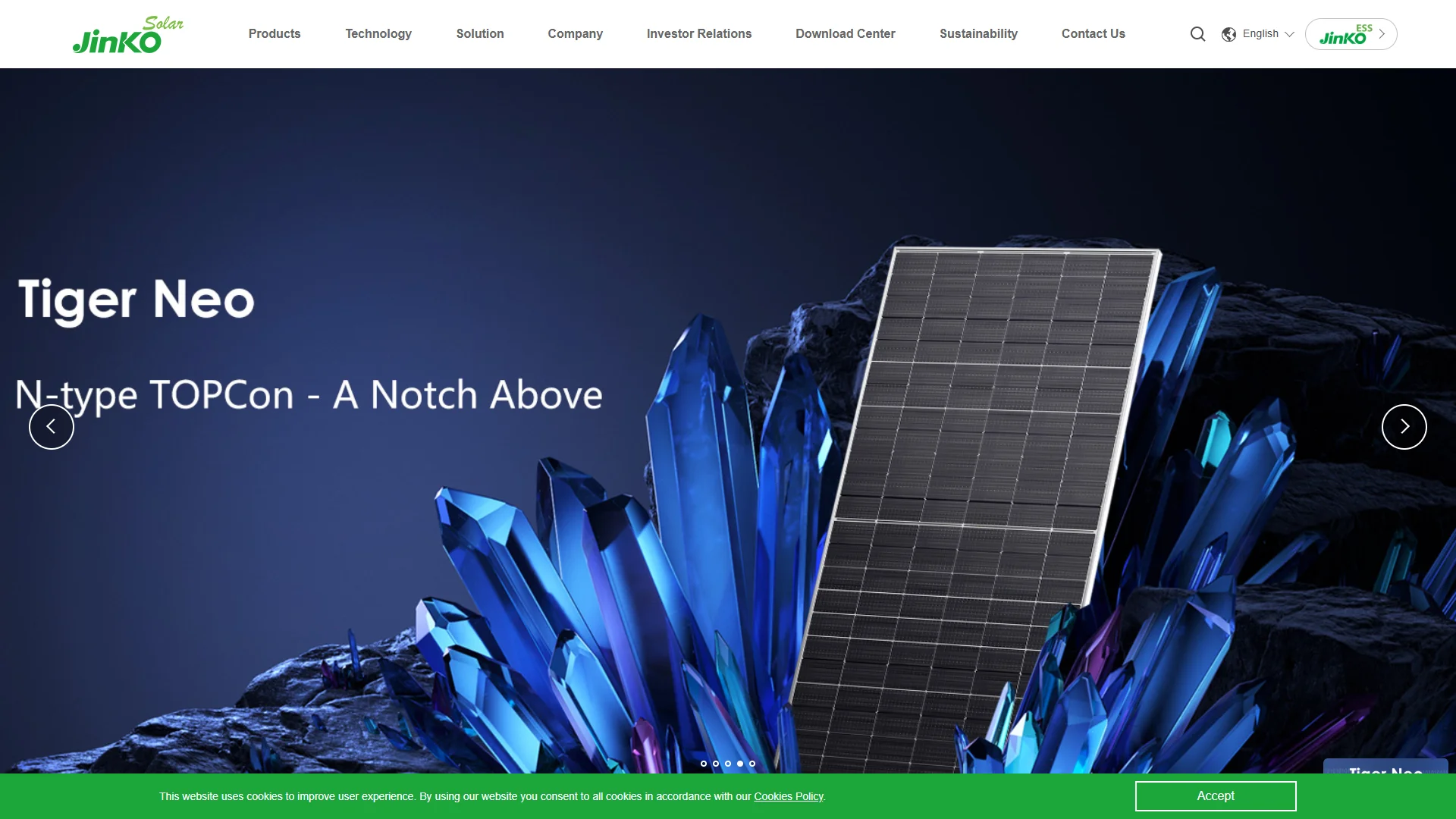
Jinkosolar is a global solar manufacturer whose portfolio includes photovoltaic modules and energy-storage products. Its module range includes Tiger Neo products based on n-type TOPCon technology, while its storage portfolio includes systems positioned for commercial, industrial, and utility-scale applications. This combination gives Jinkosolar a broader product role than a company focused only on project construction or only on packaged microgrids.

Overview
Jinkosolar’s business covers the manufacture and supply of solar modules as well as battery-energy-storage solutions. Its product materials and architecture vary by model, but its solar offerings are based on crystalline-silicon photovoltaic technology and its storage products combine battery hardware with power-conversion and system-management equipment. The company serves multiple market segments, including residential, commercial and industrial, and utility projects, subject to regional product availability.
The main competitive advantage is portfolio breadth. A buyer can evaluate modules and storage within one manufacturer’s product ecosystem, although installation, system integration, warranties, and local service may still involve regional partners. Jinkosolar’s scale and international market presence can also support procurement for larger projects, but project-specific technical support and delivery terms should be confirmed in the target market.
Pros / Key Features
- Offers both solar modules and battery-energy-storage solutions.
- Provides module families using n-type TOPCon technology, including Tiger Neo products.
- Addresses residential, commercial, industrial, and utility-scale use cases.
- Includes larger storage platforms intended for commercial, industrial, and utility applications.
- Allows project teams to compare solar generation and storage equipment from the same manufacturer.
Use Cases / Best For
Jinkosolar is best suited to buyers comparing complete solar-generation and storage portfolios rather than purchasing a standalone battery. It can be considered for commercial facilities seeking demand-management or backup capability, utility developers planning paired solar and storage, and distributed projects where module and storage procurement need to be coordinated. Homeowners should verify whether the desired battery system, installer network, warranty terms, and grid approvals are available in their jurisdiction.
2. BoxPower
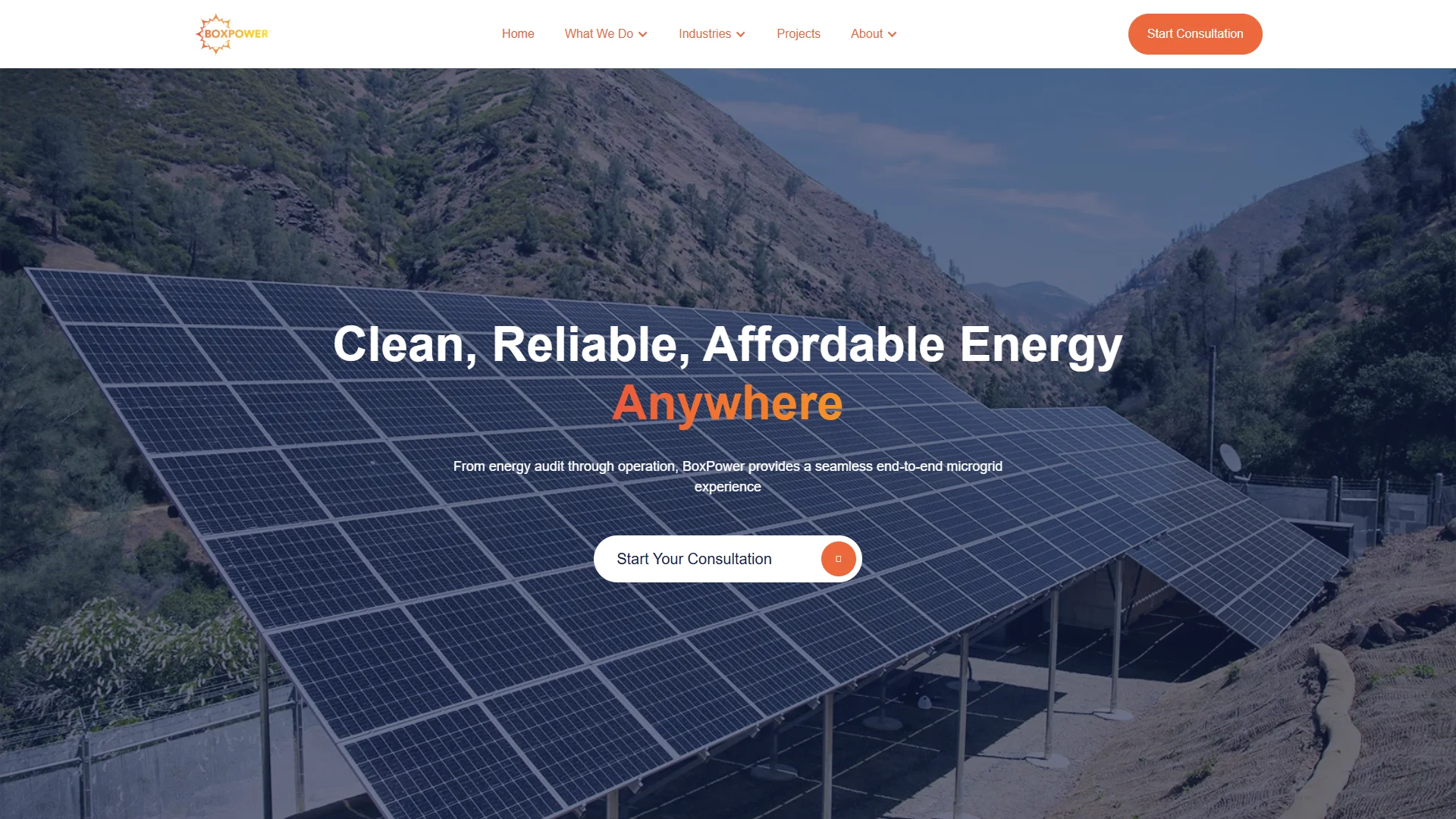
BoxPower develops modular solar-plus-storage microgrids and packaged distributed-energy systems. Its approach centers on integrating generation, batteries, controls, and supporting equipment into a repeatable system that can be deployed for remote, resilient, or community-scale power needs. The company is therefore positioned more as a microgrid-system provider than as a high-volume solar-module manufacturer.
Overview
BoxPower’s systems are designed around modular deployment. Depending on the configuration, a project can combine solar generation, battery storage, power electronics, monitoring, and other balance-of-system components in a packaged architecture. This can reduce the amount of site assembly required compared with building every element separately, although civil works, permitting, communications, and local electrical integration remain project-specific.
The company’s market focus is relevant where grid extension is difficult, power reliability is important, or a facility needs an independently managed distributed-energy system. The final system size and capabilities depend on the selected configuration and site conditions. Buyers should request current specifications for battery capacity, operating temperature, controls, warranties, and interconnection or islanding functions before contracting.
Pros / Key Features
- Uses a modular approach to solar-plus-storage microgrid deployment.
- Can combine solar generation, batteries, controls, and power-conversion equipment in a packaged system.
- Relevant to remote locations and resilience-focused projects.
- May simplify repeatable deployment compared with separately sourcing every system component.
- Supports distributed power applications where conventional grid service is limited or unreliable.
Use Cases / Best For
BoxPower is best for remote facilities, community infrastructure, critical services, and organizations seeking a packaged microgrid rather than a module-only purchase. It may also suit projects where resilience and deployment speed are more important than selecting individual components from multiple vendors. A feasibility review should cover load profiles, backup duration, renewable-resource data, fuel or generator coordination if applicable, permitting, and long-term maintenance.
3. Mortenson
Mortenson is a renewable-energy engineering, construction, and project-delivery company that works on solar and battery-energy-storage developments. Unlike a component manufacturer, it generally operates as a contractor and infrastructure partner. Its value is centered on planning, procurement coordination, construction execution, commissioning, and project management for large energy installations.

Overview
Mortenson’s renewable-energy activities include utility-scale solar construction and battery-energy-storage project delivery. The company can support owners and developers through services such as engineering coordination, procurement, construction management, installation, and commissioning. The equipment used on a project can vary according to the owner’s design, selected technology, interconnection requirements, and procurement strategy.
Its competitive advantage is project-execution capability for complex energy infrastructure. Large solar-plus-storage projects require civil works, electrical collection systems, controls, safety planning, grid studies, commissioning, and coordination with utilities and equipment suppliers. Mortenson’s role is particularly relevant when the buyer needs a construction and delivery partner rather than a direct manufacturer of panels or batteries.
Pros / Key Features
- Provides construction and project-delivery services for renewable-energy infrastructure.
- Works across solar and battery-energy-storage project types.
- Can coordinate engineering, procurement, construction, and commissioning activities.
- Relevant to complex utility-scale and institutional energy developments.
- Can work with equipment selected by the project owner or development team.
Use Cases / Best For
Mortenson is best for utilities, independent power developers, infrastructure funds, and institutional owners delivering large solar-plus-storage facilities. It is less directly comparable with a solar-module or packaged-microgrid manufacturer because its primary offering is project execution. Prospective clients should evaluate geographic coverage, contracting model, construction schedule, safety record, subcontractor structure, commissioning responsibilities, and post-construction support.
How to Choose
The appropriate provider depends first on the type and scale of the project. The following criteria help separate a component purchase from a complete energy-system or construction engagement:
- Define the project role required: Determine whether the buyer needs solar modules, batteries, an integrated microgrid, an engineering and construction contractor, or all of these services.
- Size the load and storage requirement: Review annual energy use, peak demand, critical loads, desired backup duration, and the expected solar-production profile.
- Check battery specifications: Compare usable capacity, power rating, chemistry, round-trip efficiency, operating temperature, degradation terms, fire-safety documentation, and warranty conditions.
- Evaluate solar-module performance: Review rated power, efficiency, temperature coefficient, degradation warranty, mechanical-load ratings, and certification for the installation environment.
- Confirm system integration: Verify inverter compatibility, energy-management controls, islanding capability, communications, monitoring, and utility-interconnection requirements.
- Assess resilience and safety: Ask about protection systems, emergency procedures, enclosure ratings, site access, fire-code compliance, and maintenance responsibilities.
- Review total cost of ownership: Include installation, permitting, interconnection, replacement or augmentation, software, inspections, insurance, and end-of-life handling—not only the initial equipment price.
- Verify local support: Confirm installer availability, response times, spare-parts access, warranty administration, and whether the quoted product is currently approved and supplied in the project location.
Final Verdict
Jinkosolar ranks first for buyers seeking a broad solar and battery-storage manufacturer with products spanning several project scales. BoxPower is the more targeted option for packaged, modular microgrids serving remote or resilience-focused applications. Mortenson is best understood as a large-project delivery and construction partner for developers, utilities, and institutional owners. These companies should not be compared solely by equipment price because they address different purchasing decisions. The final selection should reflect system size, operating objective, local approvals, service capability, warranty terms, and the level of engineering and construction support required.
FAQs
1. Which of these companies makes both solar panels and battery-storage systems?
Jinkosolar offers solar photovoltaic modules and battery-energy-storage solutions. BoxPower focuses on integrated solar-plus-storage microgrid systems, while Mortenson primarily provides renewable-energy project delivery and construction services rather than positioning itself as a solar-panel or battery manufacturer.
2. Is a modular microgrid the same as a standard home solar-and-battery system?
No. A modular microgrid is generally designed as a coordinated power system that can include solar generation, batteries, controls, and distribution equipment for a site or group of loads. A home solar-and-battery system is usually smaller and must be matched to residential electrical, permitting, and utility requirements.
3. What should be verified before signing a solar-plus-storage contract?
Verify the equipment model, usable battery capacity, power rating, warranties, certifications, installation scope, interconnection approval, monitoring, maintenance obligations, backup behavior, expected degradation, total project cost, and the provider’s local service arrangements.