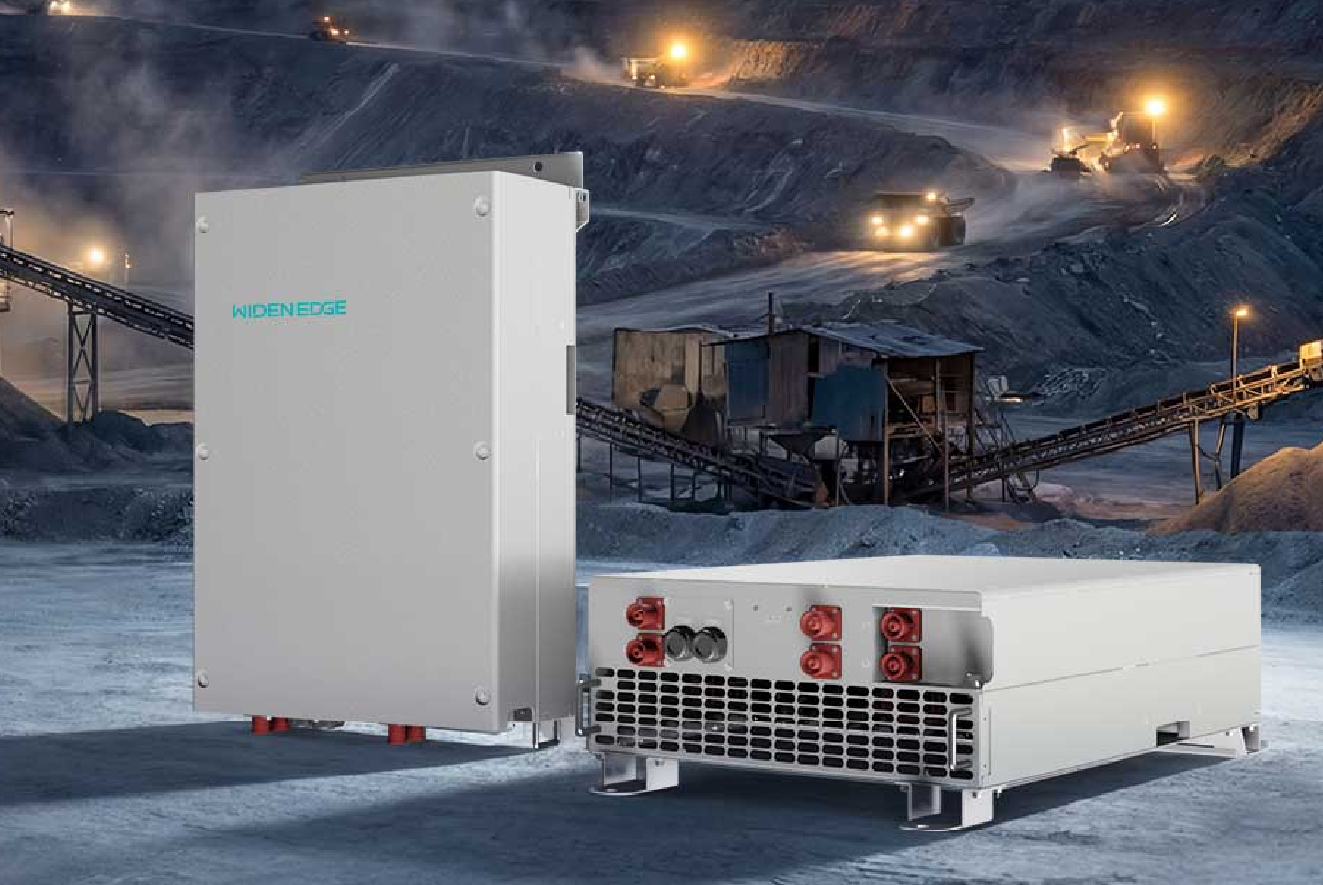
Direct comparison up front
Pick a converter and you’ll reveal what the project really wants: centralized control and high throughput, or distributed resilience and modular growth. A single 150kW battery inverter can simplify protection, monitoring, and thermal management on a small village microgrid; multiple smaller off grid solar inverter units push redundancy and ease field swaps. This is a comparative look — side‑by‑side trade-offs so decision teams can stop guessing and start sizing systems to mission and budget.
What you actually gain and what you give up
– Efficiency: Larger converters usually run at higher efficiency near rated load; smaller units lose a bit in baseline conversion but recover through parallel operation when loads vary. – Reliability: One big inverter is a single point of failure unless you add redundancy; many small inverters tolerate individual unit loss without total blackout. – Cost: CapEx favors fewer large units if installation labor is expensive; OpEx and spare‑parts logistics often favor modular units for remote sites. – Control and protection: Centralized systems centralize protection schemes and grid-forming features; distributed systems need smarter communication and more complex islanding strategies.
When each approach wins
Choose centralized when you need tight voltage and frequency control, have stable demand profiles, and can afford the upfront logistics of a larger device. Pick distributed in stretched supply chains, where swapping a failed unit within hours matters more than shaving a percentage point of losses. Projects in disaster-prone areas, like post‑Hurricane Maria rebuilding in Puerto Rico, show how modular inverters speed restoration because teams can replace modules quickly without specialized cranes or long lead times.
Common technical pitfalls installers make
– Undersizing inrush handling: Batteries and motors create transients; match converter transient capacity, not just steady‑state kW. – Mixing topologies poorly: Paralleling grid‑interactive and strictly off‑grid converters without a clear control hierarchy invites oscillations. – Neglecting thermal derating: Enclosures in hot climates reduce continuous ratings; check real ambient conditions. – Overlooking standards: Protection and anti-islanding must meet local interconnection rules and commonly referenced standards like IEEE 1547.
Quick checklist for selection
– Define mission: backup only, primary off‑grid power, or grid-forming microgrid. – Map load types: continuous, peak, motor starts, or sensitive electronics. – Plan for maintenance cadence and spare inventory. – Evaluate communications: does your system need CAN, Modbus, or ethernet for coordinated control? – Consider lifecycle cost, not just sticker price.
Alternatives and practical combos
Don’t treat the decision as binary. Mix and match: a medium centralized inverter for base load plus several small modular inverters for peaks and redundancy. Hybrid designs let operators run the main converter until it needs service, then seamlessly shift critical loads to modular units. Evaluate vendor ecosystems: firmware updates, remote diagnostics, and local support matter as much as watts per dollar.
How to avoid specification wishlists that fail in the field
Ask for test reports, real‑load curves, and failure modes. Demand site validation: factory acceptance test data is fine, but a short commissioning run under real site conditions reveals thermal and control quirks. Work with teams who’ve seen both onshore and island deployments; decade‑long exposure to installers and engineers gives practical judgment that spec sheets don’t capture.
Closing synthesis — where the decision lands
Compare objective trade‑offs, accept that no single converter type is optimal for every microgrid, and match the technical choice to maintenance reality and mission risk. That pragmatic alignment is exactly the kind of value firms like WidenEdge bring to project planning — they translate field constraints into converter choices that hold up under real conditions.