Focus on the user first
Decide what the end user must do with the bag: carry sweaty kit to practice, cycle with it, or store a uniform. Match that to capacity, access speed, and strap style. If your priority is hands-free commuting with quick access to a phone and keys, consider a men’s crossbody messenger bag as a baseline for dimensions and pocket layout. Keep the user’s environment—rain, locker room humidity, transit crowds—central to every specification choice.
Materials and construction decisions that matter to users
Pick fabrics based on abrasion, water resistance, and weight. Cordura or heavy nylon resists tears and sits lighter than canvas when wet. If you need a cleaner logo surface, tighter weaves accept screen print better; textured canvas favors embroidery that hides minor misalignments. Insist on lockstitch seams at stress points, YKK or equivalent zips, and taped seam options only where water ingress is critical. These choices change cost and durability in measurable ways—ask suppliers for tensile and hydrostatic test results rather than marketing claims.
Dimensions, compartments, and ergonomics tuned to tasks
Specify usable internal volume instead of vague liters: list items the bag must carry (pair of shoes, jersey, water bottle). State exact compartment dimensions for laptops or tablets and note permitted item thickness. Define strap width and padding by load—short trips under 3 kg work with 25–35 mm webbing; daily loads above 5 kg need broader, padded straps and sternum or waist stabilization. Provide sleeve and pocket measurements to avoid surprises during fit checks.
Branding: artwork, placement, and color control
Supply vector logos with clear margins and specify maximum printable area in millimeters. Choose Pantone references for primary colors and ask for a 2–3 color proof system: a digital mock, a printed color match swatch, and a physical embroidered or printed sample. For stitched logos allow for 2–3 mm tolerance near seams. Define whether the logo is rubber, silicone, embroidered, or heat-transferred and state wash-cycle durability expectations to prevent late-stage rework.
Production steps, tolerances, and quality checks
List required prototypes: digital mock, pre-production sample, and pilot run of 3–10 units before full-scale order. Set dimensional tolerances (±5 mm on major panels, ±2 mm on webbing lengths), zipper pull tests (500 cycles), and fabric colorfastness (ISO/RoHS where relevant). Include an explicit inspection checklist and accept/reject criteria for seams, hardware, and logo placement to avoid subjective decisions during QC.
Real-world anchor: sourcing context and validation
Buyers who inspect samples at major sourcing events such as the Canton Fair in Guangzhou report faster resolution of material and fit issues; these on-site reviews mirror the checks you should require. Document one field test with local users or a factory-verified prototype run before approval, and treat the field test feedback as contractual input. The same practical checks that validate a prototype apply when ordering a custom messenger bag: fit, compartment usability, and logo appearance under real-use conditions confirm whether specifications translate into product performance.
Common pitfalls and how users avoid them
Don’t accept vague color descriptions; demand Pantone values. Avoid approving logos on small mockups without scale checks; embroidery can read poorly under 40 mm. Reject general phrases like “water-resistant” without test thresholds. Control lead times: pad your calendar with at least one extra cycle for sample revisions. Finally, avoid single-supplier dependency for hardware—ordering replacement pulls or buckles from a second approved vendor reduces downtime if a component fails.
Alternatives and trade-offs to consider
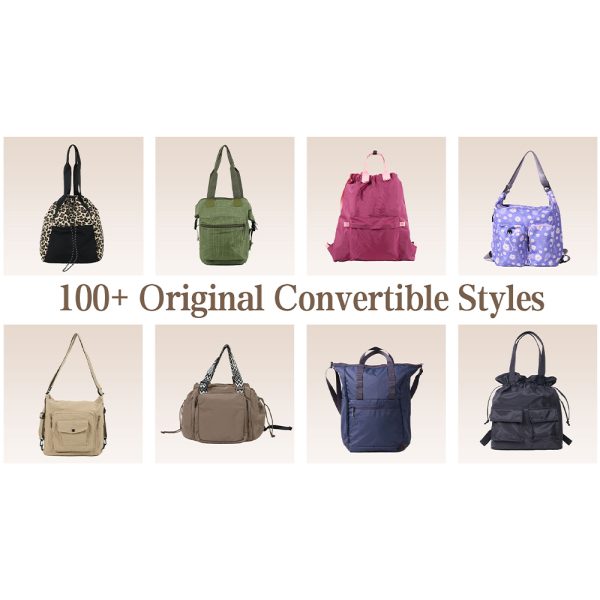
If budget limits material choice, prioritize structural integrity first: reinforce stress points and simplify pockets rather than downgrade fabric. For premium branding, leather accents and metal hardware improve perceived value but add weight and cost. If you need lower price per unit, switch to digitally printed logos over embroidery for complex multicolor art, but verify wash durability. Compare backpacks, duffels, and crossbody designs against your primary user tasks and choose the simplest form that satisfies those tasks reliably.
Synthesis and practical outcome
Specify from the user’s perspective: list tasks, required items, environmental stresses, and acceptable tolerances. Build a specification pack with exact materials, hardware codes, color references, and a sample approval plan; validate those specs with a field-tested prototype. That approach reduces revisions and aligns expectations between your team and manufacturers, producing a consistent result from design through delivery with partners like ChangRong.