Opening comparison
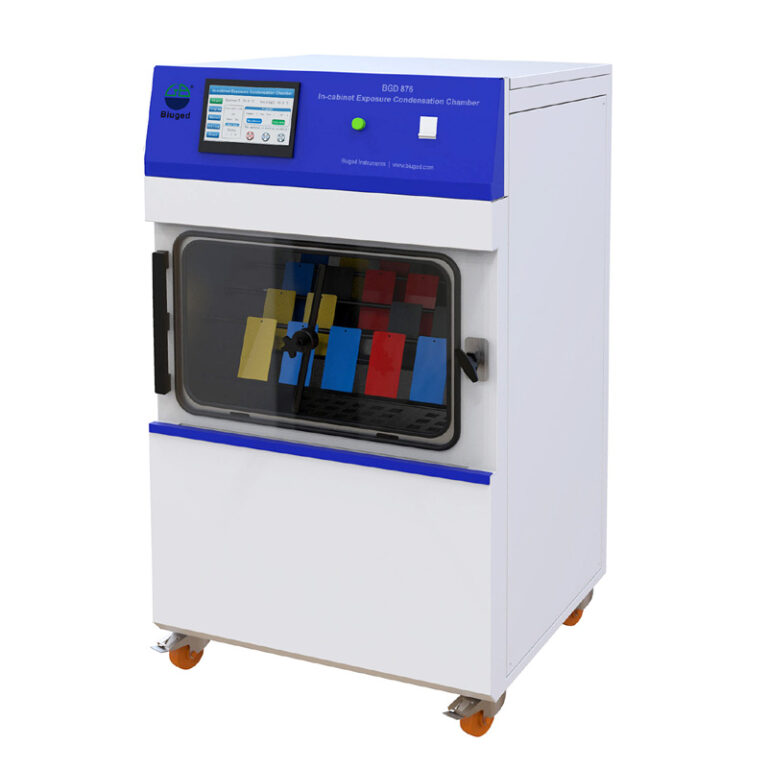
When assessing suppliers of weathering test systems, the crucial question is not which brand sounds best, but which specifications and services match your test plan; compare measured irradiance control, cycle fidelity and sample capacity rather than marketing claims. Start by checking the exact model of weathering chamber offered and how its light sources, temperature control and condensation systems map to your protocols; a visually similar cabinet can produce very different results under real use.
Primary criteria to weigh
List the attributes that alter test outcomes. Prioritise spectral match and irradiance stability, chamber homogeneity, specimen fixturing options, and precise humidity and condensation control. Ask for evidence of repeatability—logged setpoint versus actual output—and whether controllers permit programmable cycles consistent with your test standard. Equally important are software exports for raw data, the ease of replacing lamps and filters, and clear maintenance schedules. These technical points determine whether a supplier’s unit will deliver reproducible, interpretable results.
Experience and standards—evidence you can verify
Seek suppliers who reference recognised standards and who can demonstrate compliance through third‑party reports; ISO 4892-2 remains the benchmark for xenon‑arc exposure and is a sensible reference when matching test to material behaviour. Ask for documented case studies or calibrations performed by accredited laboratories and request to view sample test reports from comparable clients. Also compare training and aftercare: on‑site commissioning, operator training and accessible spare parts are tangible indicators of expertise. For clarity on available models and accessories, review the manufacturer’s catalogue of weathering test equipment and request calibration certificates tied to serial numbers.
Commercial terms and logistical realities
Compare warranties in comparable terms—what is covered, for how long, and what response times are guaranteed for critical failures. Consider lead times for both initial delivery and replacement lamps or spare controllers; long delays in consumables can distort lab schedules. Evaluate total cost of ownership: initial price, consumables, calibration cycles and expected service visits. Check whether documentation and user interfaces are provided in your preferred language and whether remote diagnostics are available for rapid troubleshooting.
Common procurement mistakes
Do not assume a lower price is economical; cheap initial purchase often hides short lamp life, poor optical uniformity or scarce spare components. Avoid buying to the lowest advertised power rating without confirming spectral output and irradiance control. Do not overlook sample fixtures: a mismatch between your test pieces and the chamber’s holders forces awkward workarounds that compromise results. Also avoid vague acceptance criteria—agree measurable performance tests at delivery so you may reject units that fail to meet them.
Decision checklist and concluding synthesis
Compare suppliers against a concise checklist: standards alignment, measured irradiance and uniformity, cycle programmability, data export and traceability, spare part availability, training and warranty terms. Balance technical conformity with practical support. This comparative approach leads directly to suppliers who pair demonstrable test performance with sensible service; experience shows that choosing a partner who documents compliance and supports your lab over time yields reliable results, which is precisely the service ethos you will find with BIUGED.