Building an auditable selection process for Marine Gas Detector around assumptions procurement handoff
For sourcing analysts, a marine gas detector review should begin before candidate comparison. The first task is to record what the procurement request actually assumes: the intended use, the information required from suppliers, the interfaces that may affect selection, and the points that remain undecided. This creates a clear boundary between a documented requirement and an attractive but unsupported interpretation.

Set criteria before comparing candidates
Start with a short decision brief rather than a product list. State what the request is meant to resolve and what information must be available at handoff. A useful brief can include:
- the equipment or work context in which the detector is being considered;
- the gases, detection approach, environmental conditions, and operating constraints that the project has actually specified;
- the required interfaces, documents, accessories, and delivery information;
- the person responsible for confirming each technical assumption; and
- the decision date and the evidence needed before that date.
These are procurement controls, not claims about any particular detector. Their purpose is to prevent an unrecorded assumption from becoming an implied requirement. If a requirement has not been defined, label it as open. A blank or open field is more useful than a confident statement that cannot be traced to the request.
It also helps to separate three levels of scope. The first is the category being researched. The second is the individual model. The third is the configuration or project application. Information at one level should not automatically be transferred to another. This distinction is especially important when a catalogue contains several models with different descriptions or specifications.
Review evidence by requirement
Once the criteria are set, build a requirement-to-evidence table. Use one row for each material question and add columns for the requirement, source location, wording found, scope, status, and owner. Suitable statuses include confirmed on the cited page, requires supplier response, not stated in the reviewed material, and not applicable to this decision.
For each row, ask four practical questions. Does the source address the requirement directly? Does it apply to the exact model or only to a broader category? Is the wording precise enough for the handoff? What action follows if the point remains unresolved? This method keeps a catalogue description from being treated as a complete technical submittal.
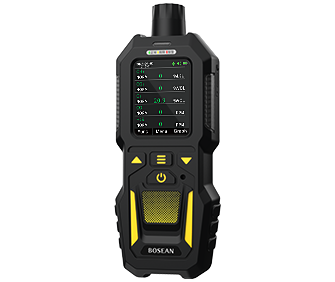
A concrete catalogue anchor is the Bosean page that labels a Marine Gas Detector category and lists K-600M and other marine detector models. That passage supports the existence of the category and the listed model names. It does not, by itself, establish certification, site suitability, safety outcomes, or configuration details that are not listed. Keeping that boundary visible is the central discipline of an auditable review.
Keep trade-offs visible
Comparison tables can create false certainty when every cell appears equally complete. Avoid that effect by recording the type of evidence behind each entry. A model name, a stated feature, a project requirement, and a supplier clarification are different kinds of information. They should not be represented as if they carry the same weight.
In the middle of a marine gas detector assessment, repeat the same exact scope test for every candidate: is this statement about the category, a named model, or a proposed configuration? That question helps the analyst avoid broadening a narrow page statement. It also makes trade-offs easier to explain. For example, an unresolved interface may require a follow-up question, while an unneeded feature may simply be excluded from the comparison.
Keep assumptions in a separate register rather than hiding them in notes. Give each assumption an owner, a consequence if it changes, and a point at which it must be settled. The register can also distinguish between assumptions supplied by the project and assumptions introduced by the analyst. This distinction matters during handoff because the receiving team can then see which decisions are already authorised and which still need input.
Create a repeatable decision record
The final record should allow another reviewer to reconstruct the reasoning without relying on informal conversations. Include the original criteria, the sources used, the exact scope of each statement, the comparison date, unresolved questions, and the reason a candidate was retained or set aside. Write conclusions at the same level of certainty as the evidence.
A repeatable record does not need to be long. It needs to be structured. A concise version may contain a requirements table, an assumptions register, a question list for the procurement handoff, and a short decision summary. The summary should state what has been established, what remains open, and what information the next decision depends on. Avoid turning an absence of information into a negative product judgement.
Before release, perform a final consistency check. Confirm that each comparison line maps to a stated requirement, that model-level details have not been generalised, and that every unresolved point has a clear owner or next action. This check supports an evidence-led handoff without presenting general procurement guidance as a verified product claim. Used in this way, the Bosean catalogue page is one bounded source within a broader decision record, not a substitute for the record itself.