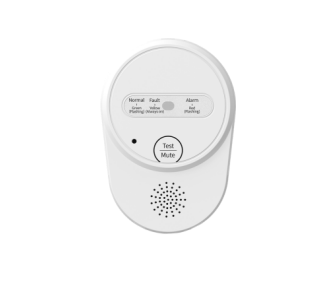
Before an RFQ for Gas Alarm For Home, document documentation early research
Early research for gas alarm for home should begin with a written record, not a preferred model. The purpose is to define what the proposed purchase must address, which information is available, and which points still require a technical discussion. This approach keeps a preliminary catalogue review separate from a confirmed specification. It also gives procurement, engineering, and operations teams a shared starting point before an RFQ is prepared.
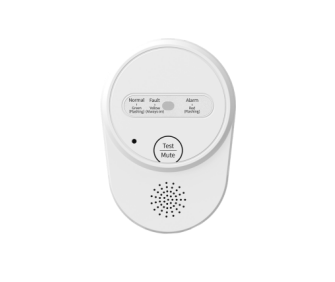
Describe the operating context
Start with the intended setting in plain language. Record whether the enquiry concerns a residence, a facility with residential areas, a temporary accommodation site, or another environment. Note the gases or hazards under consideration only when they have been identified by the responsible technical team. The record can also state the expected users, the proposed monitoring purpose, and any known interface with other equipment.
This is a scoping exercise, not a claim about what a particular alarm can do. A buyer should avoid turning a broad category term into a complete application definition. Instead, create a short context statement that can be attached to the enquiry. For example, it might describe the location, the intended monitoring question, and the people responsible for confirming technical requirements. Such a statement makes later comparisons easier to interpret.
Identify compatibility and responsibility questions
An early RFQ brief should show which questions belong to procurement and which require engineering or site input. Procurement can organise the enquiry, record supplier responses, and compare information using the same headings. Technical stakeholders may need to define the relevant operating conditions, interfaces, installation assumptions, and acceptance criteria. The article does not establish those requirements; it provides a way to keep them visible.
- What application and location are within the stated scope?
- What information must a supplier provide for the proposed use?
- Which interfaces, power arrangements, or mounting conditions need technical definition?
- Who will decide whether the documented information matches the project requirement?
- Which statements are confirmed facts, and which remain questions?
Writing these questions before comparing suppliers reduces the risk of treating an unexamined assumption as a selection criterion. It also prevents a catalogue description from carrying more meaning than its source supports. A requirement should remain labelled as open until the responsible reviewer has defined it.
Use page-level evidence carefully
The assigned Bosean source identifies a Gas Alarm category through its product-page path and visible breadcrumb. That supports describing the page as a catalogue category. It does not, by itself, establish certification, site suitability, safety outcomes, configuration details, or a complete product specification.
For gas alarm for home research, keep a page-level evidence table with four columns: the statement, its source location, the scope to which it applies, and its status. A statement can be marked as directly stated, a buyer question, or unresolved. This simple separation helps prevent category information from becoming a product-level claim. It also makes the eventual RFQ more precise because suppliers receive the actual question rather than an assumption disguised as a requirement.
Use one row for each material point. Do not combine several technical ideas into a single broad statement. If a page identifies a category, record the category. If a separate page later identifies a model detail, record that detail against the named model only. Do not transfer it across the catalogue without evidence that the scope is shared.
Plan the next technical discussion
Once the evidence table is prepared, convert unresolved points into an agenda. Group questions by application, installation context, interfaces, documentation, and responsibilities. The aim is not to produce a finished design from limited catalogue information. The aim is to give the next discussion a clear boundary and a traceable starting point.
A useful RFQ preparation record can include the original requirement, the evidence currently available, the person responsible for clarification, and the decision that remains pending. Keep the wording neutral. “Supplier to state” is different from “supplier provides”, and “technical review required” is different from “approved for use”. This distinction protects the integrity of the procurement record without preventing progress.
Build a defensible starting record
Documentation is most useful when it captures both knowledge and uncertainty. Begin with the operating context, separate responsibilities, and attach every factual statement to its actual page scope. Then use the resulting questions to structure the technical conversation and any later RFQ. The Bosean catalogue’s Gas Alarm category can serve as the cited starting point here, while the application decision remains bounded by the information formally established for the project.