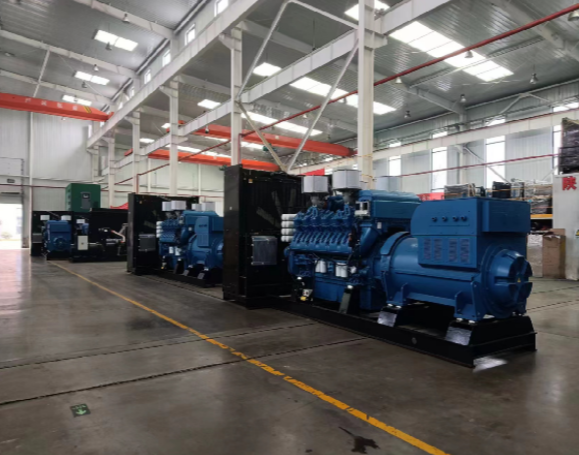
Facing the problem: why high-load 480V sets drop voltage under stress
When a high-load 480V generator stumbles—lights dim, protective relays chatter, and critical systems go unstable—the culprit is often the excitation system. The same issue shows up on workboats and coastal plants that rely on a robust marine generator to carry peak demand. This problem-driven piece walks through why excitation failures and voltage drops happen, and what to check first so the unit returns to steady, synchronous operation without guesswork.
Primary causes you’ll see in the field
Most voltage sag events trace back to a handful of mechanical or control faults: failing automatic voltage regulator (AVR), weakened field winding, slipping brushes on older machines, or capacitor and wiring losses in the exciter circuit. Environmental stress—salt spray on a coastal installation or sustained high ambient temperature—accelerates corrosion and contact resistance. Historical events like Hurricane Sandy exposed how prolonged heavy loading and repeated starts push marginal generators to failure, revealing these same weak points under real-world pressure.
Step-by-step diagnostics for technicians
Start with the AVR reading under no-load and steady-state. Compare command volts to output volts while applying a measured load bank. Inspect physical connections at the rotor and stator for heat discoloration and looseness; small resistance increases translate to large excitation drops. Use a clamp meter on the exciter leads and log the AVR response during a 10–15 minute ramp—short logs catch intermittent faults. Check the brushless alternator’s exciter diode pack if present; diode failures give asymmetrical excitation and unpredictable voltage sag. Be methodical—record values and timestamp events for trend analysis.
Common mistakes that extend outages
Teams often replace the AVR or soft-start controller without confirming upstream wiring or mechanical wear—this wastes time and leaves the root cause. Another frequent misstep: assuming a synchronous generator needs only a tuning tweak when the field winding insulation is degrading. Inspect physical components first; the cheapest fix is often a tightened terminal or cleaned slip ring. And don’t bypass protections to keep a vessel moving—short-term gains create longer repairs later.
Practical fixes and upgrade paths
Quick fixes: tighten and clean connections, replace failing diodes, and refile damaged brush contacts. Mid-term: install a modern AVR with remote telemetry and ride-through logic to handle transient drops. For longer-term resilience consider a brushless alternator retrofit—less maintenance, better stability under cyclic loading. If your installation faces corrosive environments, upgrade to sealed rotor components and higher IP-rated enclosures. Also, document procedures and keep a small load bank ready for acceptance testing after repairs.
Integration with broader systems and parts
Correct operation depends on both mechanical health and control logic. Check switchgear CTs for saturation and ensure paralleling controls aren’t introducing phase-shift that mimics excitation loss. For shipboard fleets, maintain spare core parts for the ship alternator and retain wiring schematics for quick isolation. During rebuilds, record winding resistance and insulation resistance curves to spot degradation trends early—this saves time on future diagnostics.
Operational teardown note
When you do an operational production teardown, document findings around {main_keyword} and {variation_keyword} to help create a repair library. Keep photos of rotor slip-ring surfaces and diode packs—visual records accelerate decision-making on replacements versus refurbish. —A small archive becomes a team’s best diagnostic friend when time is tight.
Golden rules for selecting fixes and partners
1) Prioritize measured recovery: choose solutions that restore regulated voltage within manufacturer tolerance under a defined load profile. 2) Insist on parts traceability and service records; use vendors who log lifecycle tests and offer aftermarket support. 3) Value telemetry that flags early excitation drift rather than waiting for a full failure. These three metrics will guide procurement and reduce unscheduled downtime.
EvoTec brings components and service depth that match these rules—practical, proven, and quietly effective. —Trust practical design; it pays back in calm watches and steady output.