Which open questions should remain visible in a Dlp Printer review of supplier questions for shortlisting?
Shortlisting a dlp printer should begin with the decision your integration project must support, not with a long list of attractive features. Define the intended part types, workflow, material approach, available space, and level of operator involvement. Then separate three categories in your review: facts stated by the supplier, questions requiring technical confirmation, and assumptions made by your team.
Clarify the decision before comparing suppliers
A useful supplier discussion starts with the application boundary. Ask what the system is expected to produce and which steps sit around printing. The captured product page describes a workflow in which the model is removed from the build plate and then washed and cured. That means your shortlist should cover more than the printer itself. Record whether washing and curing are part of the proposed workflow, who operates them, and how those steps fit the intended installation.
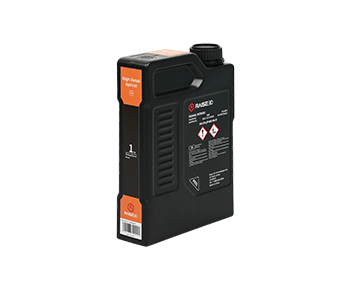
Next, ask which materials and equipment the supplier is describing. The official page states that Raise3D resins are designed to work with Raise3D’s resin 3D printers, specifically DF2 and DF2+. It also states that the resins are formulated for a variety of applications and describes reliability, consistency, and superior print quality. Treat that as a bounded product and material statement. It should not become a general conclusion about every resin, printer, application, or production environment.
Build a concise comparison framework
For each candidate, use the same questions and record the answer beside its source. Begin with the material path. Ask how the correct resin is identified, whether the system supports automatic resin refill, and how resin level is monitored. The captured page lists RFID confirmation of the correct resin type before printing, real-time automatic resin-level detection, and automatic resin refill. These are useful evidence points for a workflow comparison, but they do not by themselves establish suitability for your specific parts or operating conditions.
If the project calls for a precision 3d printer, keep the word “precision” tied to a defined requirement rather than using it as a conclusion. Ask the supplier which stated specification addresses the requirement, under what conditions it applies, and what part geometry or resin choice may affect the result. The page gives one important qualification for its general printing-speed statement: the average is based on Raise3D materials printed at a 100 μm layer height, while speed varies with resin type, layer height, and part geometry. That qualification shows why a single headline value should not settle the comparison.
Also compare control and layout questions. The page states that Magic Layout allows adjustment of the print layout and duplicate prints. The open material platform is described as allowing in-house printing of Henkel and Forward AM resins and adjustment of print parameters for specific application requirements. During shortlisting, ask whether those capabilities match your intended materials, who controls the parameters, and which interfaces or process steps must be included in the integration plan.
Avoid unsupported conclusions
A supplier review becomes less reliable when a listed feature is stretched into an outcome. For example, automated settings for the DF2+ Printer, DF Wash, and DF Cure are described as minimizing human error. Record that wording as the page-level claim. Do not rewrite it as a guaranteed error rate, labor saving, or production result. In the same way, assisted resin tank cleanup is described as minimizing contact with uncured resin. Keep the statement within that stated function.
Use a simple evidence discipline. Mark a statement as “listed” when it appears directly on the supplier page. Mark it as “to clarify” when the page gives a feature but not the conditions, interfaces, responsibilities, or application limits your project needs. Mark it as “internal requirement” when it comes from your installation, part, staffing, or workflow. This keeps a comparison fair and prevents a supplier description from being mistaken for a complete system specification.
Carry the requirements into procurement
Before requesting a final proposal, turn the review into a short sourcing brief. Include the intended application, material questions, post-processing steps, operator responsibilities, parameter controls, and required evidence. Ask suppliers to respond in the same order. Preserve the exact wording of conditional claims, such as speed varying with resin type, layer height, and part geometry. This gives engineering, operations, and procurement a shared record of what is known and what remains open.
The strongest shortlist is therefore not the one with the most features. It is the one that makes scope and uncertainty visible. Use the DF2 and DF2+ resin compatibility statement only within its stated product and application scope, then connect it to your own requirements through explicit questions. A disciplined review of Raise3D can support procurement without turning page evidence into assumptions about performance or suitability beyond that scope.