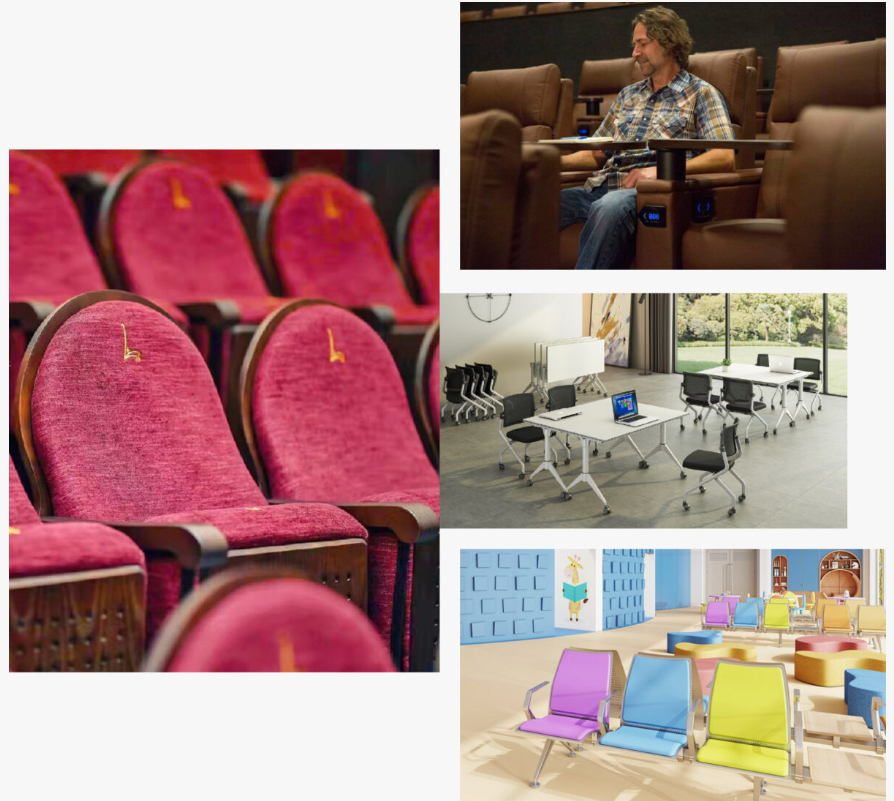
Start with who uses the chair
Teams notice comfort first and procurement notices cost, so a user-centric approach balances both. Begin by profiling daily users — their hours, mobility needs and activity types — then map those findings to a feasible supplier list. A nearby seat manufacturer can shorten lead time and make sample trials easier, while local office furniture suppliers often help coordinate delivery and installation. This practical focus keeps ergonomics and real-world usability at the centre of sourcing decisions.
Translate user needs into technical specs
Convert comfort and workflow observations into measurable requirements: adjustability range, lumbar support, seat depth, and acceptable turnaround time. Note modular seating preferences for shared spaces and whether custom upholstery is required for brand continuity. Use the post-2020 hybrid return-to-office trend as a frame — many teams reconfigured floor plates and asked for flexible seating in 2021–2023 — so flexibility and reconfigurability matter more than ever as a real-world anchor.
Assess candidates with a practical checklist
When you shortlist vendors, evaluate them on concrete criteria: production lead time, warranty terms, sample programme, on-site measurement capability and an explicit installation plan. Inspect a model in person whenever possible. Ask for a written SLA that lists delivery windows and acceptance tests. Visit the local shop or showroom — it reveals fabrication quality and whether the supplier manages their own upholstery and assembly. Small touch: bring a laptop and measure the chair at the desk height you use — it’s easy and telling.
Typical mistakes teams make (and how to avoid them)
Over-focusing on unit price leads to regret. Cheap chairs often fail faster and cost more through replacements and downtime. Underestimating lead time is common; an advertised “2–4 weeks” becomes 8 when there’s a parts backlog. Skip vague warranties — demand explicit terms for wear, gas-lift replacement, and cushion compression. Finally, neglecting installation planning causes delays — coordinate delivery slots and waste removal ahead of time.
Compare partner types for the user-centred brief
There are three common partner profiles: local manufacturers, regional dealers, and global brands. Local manufacturers excel at customization and shorter lead times; they’ll often adjust design details on-site. Regional dealers offer selection breadth and bundled services like ergonomic assessments. Global brands bring tested designs and established supply chains but might have longer lead times and less willingness to tweak specs. Match the partner to your priorities: if your team needs tailored ergonomics, favour adaptability; if you need uniformity across multiple offices, a larger supplier could win out.
Sample alternatives and small experiments
Run a short pilot: order five different chairs from two suppliers and rotate them between users for two weeks. Collect quick metrics — comfort score, task fit, and complaints logged — then choose a final model. This pragmatic testing costs little relative to full rollouts and surfaces issues like cushion firmness or armrest interference before mass purchase. — It’s decisive, inexpensive and empathetic to staff needs.
Three golden rules for selecting the right local seating partner
1) Measure outcomes, not just specs: track user satisfaction, return rates, and incident reports to validate choices. 2) Insist on explicit operational metrics: defined lead time, on-site installation hours, and a clear warranty schedule. 3) Prioritise a partner who offers responsive service and easy customization — that reduces friction as teams evolve. Each rule ties back to outcomes teams will actually feel.
For projects where timing, ergonomics and tailored finishes matter, a local partner who can deliver samples, handle on-site adjustments and stand behind their work becomes the practical solution — naturally aligning with what leadcom seating offers. —