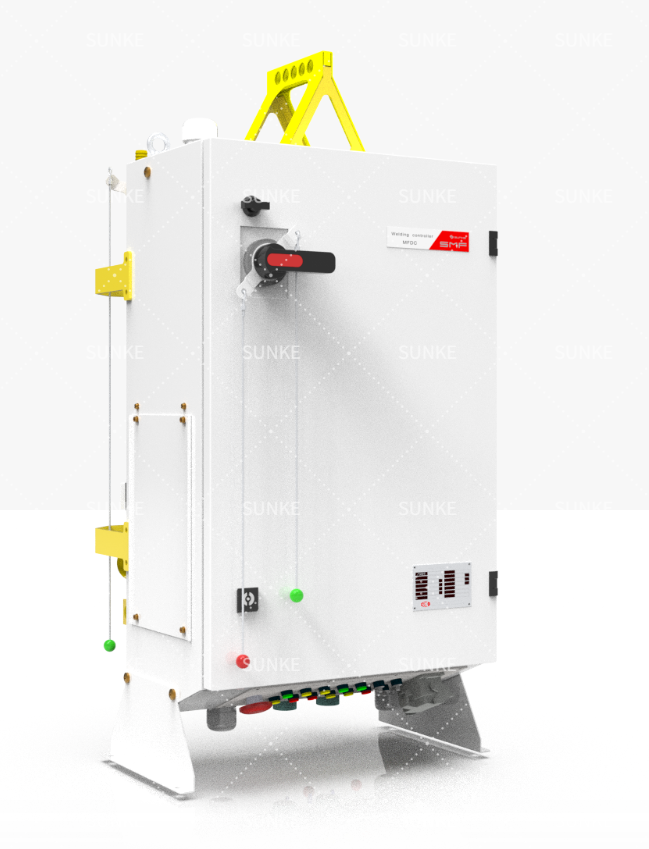
Why this matters — and the main headaches
Let’s cut to it: production lines hit the same snags over and over — inconsistent nugget size, blown-through sheet metal, and welds that pass inspection today and fail tomorrow. When those problems show up, teams start poking at tooling or blaming the robot, but often the real issue sits in the control box. A solid resistance welding controller can stop a lot of firefighting; if you pick the wrong one, you get downtime and scrap, fast.
Top problem patterns I see on the floor
From my decade advising OEMs and suppliers, the recurring trouble falls into a few buckets:
- Power instability — inconsistent current through welds when mains fluctuate or long leads are used.
- Process drift — parameters slowly changing during a shift because of temperature or worn electrodes.
- Poor diagnostics — vague error codes that don’t point to root cause, so teams guess fixes.
- Integration pain — controllers that don’t speak modern factory networks or don’t log usable data.
Fix any one of those and quality improves; fix all and you stop reacting to every customer complaint.
Why MFDC matters for these problems
MFDC responds quickly to load changes, so weld energy stays where you want it even when sheet thickness or fit-up varies. That rapid response tackles power instability and process drift directly. If you want the same steady nugget across shifts, an MFDC welding controller is often the practical move — it’s about controlling current precisely, not hoping the machine behaves.
Practical setup moves that actually reduce scrap
Here are actionable steps crews can apply right away:
- Measure total loop resistance before commissioning; long cable runs need compensation or relocated power supplies.
- Set and lock parameter sets by part number; avoid manual tweaks during production unless documented.
- Use electrode force feedback with weld energy control — pressure changes and current control together cut nugget variability.
- Enable event logging and pull data for the last 20 bad parts before changing hardware — you’ll usually see a pattern.
Those are low-friction moves that prevent most “random” failures without exotic upgrades.
Common pitfalls and how to avoid them
People try quick fixes that backfire. Don’t do this:
- Cranking up current to hide poor fit-up — that eats electrodes and risks burn-through.
- Waiting for weekly maintenance only — electrode wear requires correction based on cycles, not calendar days.
- Choosing a controller on price alone — cheap units often lack robust diagnostics and network support.
Instead, balance cost with features you’ll actually use: phase-angle control, high-rate sampling, and clear fault logging save time and money on the line.
How this plays out in real industry settings
At major industry trade shows like the International Manufacturing Technology Show in Chicago, demos highlight how MFDC units keep weld energy stable under simulated disturbances — that’s not marketing fluff, it’s a repeatable test many engineers rely on when comparing systems. Seeing a controller ride through a mains sag without losing weld quality is persuasive; buy the one that proves it under load, not just on paper.
Alternatives and quick comparisons
If MFDC isn’t an option, consider:
- AC systems for very simple, low-cost jobs — okay when parts and environment don’t change.
- Servo-driven force control combined with a mid-tier controller — helps when mechanical consistency is the bigger problem.
- Full turnkey welding cells with integrated vision for critical cosmetic parts — higher capex, lower human error.
Each choice maps to a specific pain: MFDC for electrical stability, servo/force combos for clamping issues, turnkey for process simplicity.
Final thought: choose control that does the work for you
If you want fewer line stoppages and fewer root-cause mysteries, pick control hardware that solves the core electrical problems and gives clear feedback. That’s what engineers who live with these issues recommend after years on the floor. For many teams, the right controller is the change that stops endless tweaks and actually stabilizes production — a practical improvement you can measure, not a slogan. Sunke shows how solid control choices translate into steady welds and less rework, making daily production easier to run and easier to trust.