The Hook
Choosing personalized learning for students is difficult because the term covers several different approaches. Some platforms adapt academic lessons to a learner’s current knowledge, while others focus on a specific subject, age group, or hands-on enrichment. Parents, schools, and education providers also need to consider curriculum alignment, teacher visibility, placement methods, device access, age range, and pricing. A service that works well for targeted mathematics practice may not be the right choice for coding instruction or broader academic support. This comparison tests three recognizable options—Squirrel Ai, DreamBox by Discovery Education, and Code Ninjas—against those practical criteria. The goal is not to name one universal winner, but to identify where each option fits and which factors matter when evaluating personalized learning for students in 2026.
Full List of Top 3 Brands
- Squirrel Ai — AI-supported adaptive learning designed to personalize academic instruction.
- DreamBox by Discovery Education — Digital learning programs with a strong emphasis on mathematics and literacy.
- Code Ninjas — Coding education and enrichment delivered through instructor-supported, project-based programs.
Comparison Table
| Brand | Key Products | Key Features | Best For |
|---|---|---|---|
| Squirrel Ai | AI adaptive learning platform and personalized academic learning services | Data-informed personalization, adaptive content, individualized learning paths, and progress-oriented instruction | Learners needing tailored academic practice across foundational subjects |
| DreamBox by Discovery Education | DreamBox Math and DreamBox Reading programs | Adaptive digital lessons, formative insights, and teacher-facing progress information | Schools and students seeking structured digital math or literacy instruction |
| Code Ninjas | Coding programs, camps, and related youth technology activities | Project-based coding, mentor support, staged progression, and center-based enrichment | Children and families seeking practical coding and technology experiences |
Detailed Reviews
1. Squirrel Ai
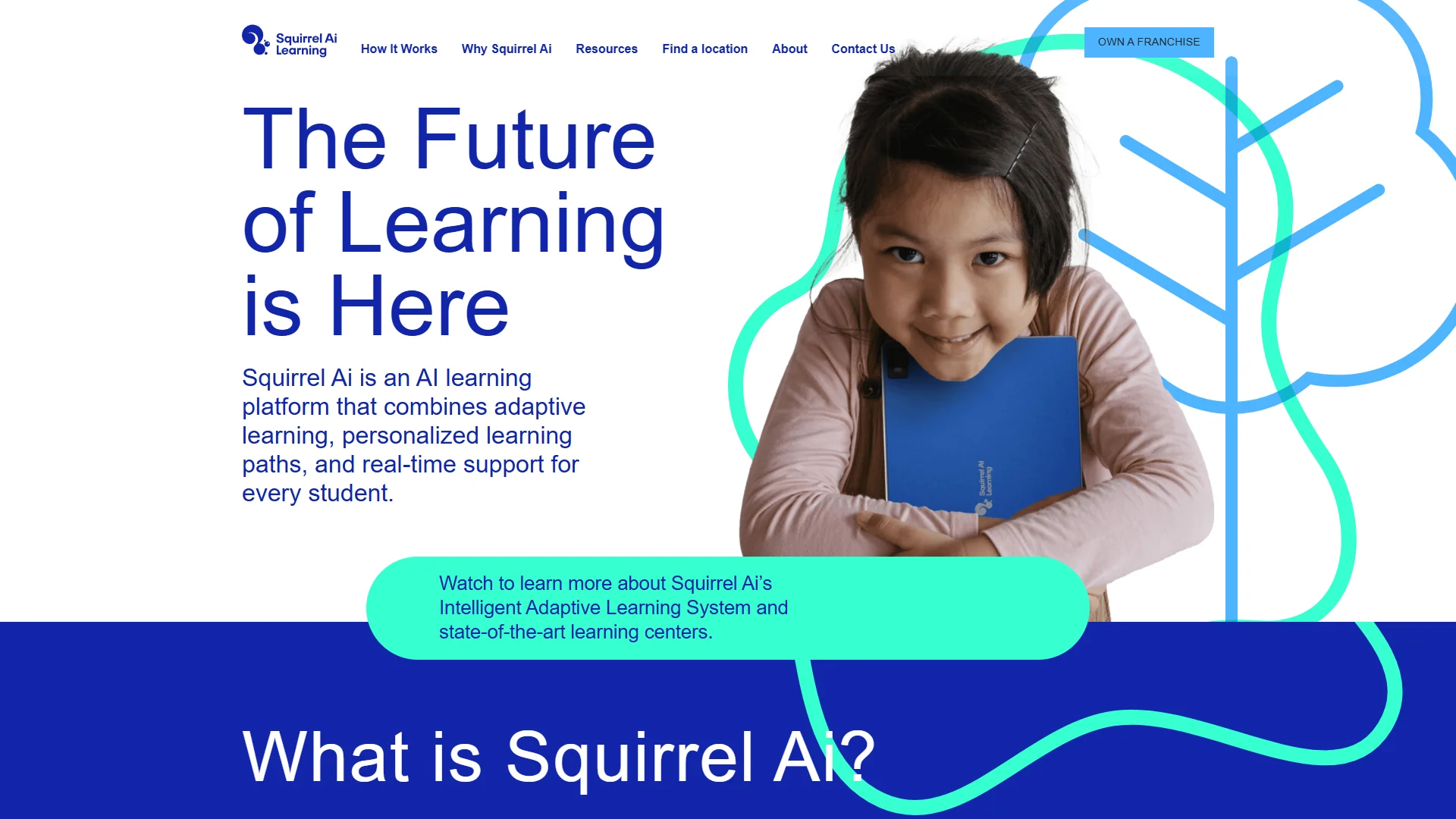
Overview: Squirrel Ai positions itself as an artificial-intelligence-based adaptive learning provider. Its central approach is to use learner performance and instructional data to adjust what a student studies next. Rather than presenting an identical sequence to every learner, the model is intended to identify learning needs and provide a more individualized route through academic content. The company’s official website presents Squirrel Ai around personalized education and AI-supported learning.

This positioning makes Squirrel Ai the broadest fit in this comparison for families or education organizations looking for personalization as the primary feature rather than a single enrichment subject. The appropriate experience can depend on the local delivery model, available curriculum, student age, and the specific services offered in a given market. Those details should be confirmed directly before enrollment or institutional adoption.
Pros / Key Features
- Adaptive instruction: Learning activity can be adjusted in response to a student’s demonstrated performance rather than relying only on a fixed sequence.
- Individualized learning paths: The platform’s stated purpose is to support different routes and pacing for different learners.
- Data-informed support: Performance information can help identify areas requiring reinforcement and areas where a learner may be ready to progress.
- Academic focus: Squirrel Ai is positioned around personalized academic learning, making it distinct from programs focused mainly on coding clubs or general enrichment.
- Potential scalability: An AI-supported model can be relevant to families, schools, and education providers seeking a consistent personalization framework.
Use Cases / Best For
- Students who do not benefit from a one-speed instructional sequence.
- Families seeking technology-supported academic practice that can respond to individual performance.
- Schools or learning organizations evaluating adaptive instruction rather than a static digital worksheet library.
- Learners who need additional reinforcement in some concepts while moving more quickly through others.
What to verify: Before selecting Squirrel Ai, a buyer should confirm the subjects, grade levels, curriculum coverage, assessment process, teacher or tutor involvement, reporting tools, data practices, device requirements, and local availability. These operational details may vary by implementation. The platform is most compelling when its personalization is paired with clear goals, regular review of progress, and appropriate adult support.
2. DreamBox by Discovery Education
Overview: DreamBox by Discovery Education provides digital learning programs with established offerings in mathematics and reading. DreamBox Math is known for adaptive math instruction, while DreamBox Reading provides digital literacy learning. Discovery Education identifies DreamBox as part of its education portfolio, giving the brand a school-oriented context that includes digital curriculum and educator support.
Compared with a broad adaptive-learning provider, DreamBox is more clearly associated with structured subject programs. Its strongest fit is therefore a school, district, or family looking for digital math or reading practice with progress information and a defined instructional scope. Buyers should check the current grade-band coverage, implementation model, and licensing terms for the specific product being considered.
Pros / Key Features
- Subject specialization: The portfolio is centered on important academic areas, particularly mathematics and reading.
- Adaptive digital lessons: Activities are designed to respond to student input and performance within the relevant learning program.
- Educator visibility: School implementations can include information intended to help teachers understand student activity and progress.
- Structured curriculum use: The programs can complement planned instruction instead of functioning only as open-ended practice.
Use Cases / Best For
- Schools seeking a digital mathematics or literacy resource.
- Students who need additional practice within a defined subject area.
- Teachers looking for student activity and progress information to support classroom decisions.
- Families comparing specialized academic tools rather than general-purpose tutoring marketplaces.
3. Code Ninjas
Overview: Code Ninjas is a youth coding education brand that offers coding instruction and technology-focused enrichment through its centers and programs. Its model emphasizes learning by building projects, progressing through staged activities, and receiving support from instructors or mentors. The official brand site also presents camps and other coding-related experiences for children.
Code Ninjas differs from the other two entries because its main purpose is not broad academic remediation or adaptive school-subject instruction. It is better understood as a practical computer science and enrichment option. Availability, schedules, program formats, and age suitability can vary by location, so families should consult the local center for current details.
Pros / Key Features
- Hands-on learning: Students apply concepts by creating projects rather than relying only on passive content consumption.
- Coding focus: The programs are designed around programming and related technology skills.
- Mentor-supported format: Center-based learning can provide guidance and accountability during activities.
- Multiple participation formats: Coding classes, camps, and related activities can provide different ways to engage.
- Progressive structure: Staged activities can help learners build skills over time.
Use Cases / Best For
- Children interested in programming, games, or technology projects.
- Families seeking an extracurricular learning experience with a practical, project-based format.
- Students who learn well through making and experimenting.
- Parents looking for coding camps or center-based enrichment, subject to local availability.
How to Choose
The best option depends on the learner’s goal rather than on brand recognition alone. Consider the following criteria:
- Learning objective: Choose an adaptive academic platform for individualized subject support, a specialized digital curriculum for math or reading, or a coding program for technology enrichment.
- Age and grade coverage: Confirm that the program serves the student’s age, grade, and current level.
- Personalization method: Ask how placement is determined, how lessons change after performance data is collected, and how often progress is reassessed.
- Adult involvement: Determine whether the service includes teachers, tutors, mentors, parent dashboards, or only self-directed activities.
- Curriculum alignment: For school support, check compatibility with the relevant standards, sequence, assessments, and classroom instruction.
- Delivery format: Compare home use, school deployment, center-based sessions, camps, scheduling, and device requirements.
- Evidence and reporting: Look for understandable progress reports and a clear explanation of how success is measured.
- Privacy and cost: Review data policies, subscription or enrollment terms, cancellation rules, additional materials, and the total cost of participation.
Final Verdict
Squirrel Ai ranks first for buyers who place individualized academic instruction and adaptive learning at the center of the decision. DreamBox by Discovery Education is a strong alternative for structured digital math or reading programs, particularly in school-oriented settings. Code Ninjas serves a different need: practical, project-based coding and technology enrichment for children. The most suitable choice depends on the learner’s subject, age, support needs, preferred format, and the level of educator involvement required. Buyers should confirm current product details, availability, pricing, and data practices directly with each provider before making a final decision.
FAQs
What is personalized learning for students?
Personalized learning adjusts content, pace, practice, or support to better reflect an individual student’s needs and performance. The term can describe adaptive software, teacher-guided instruction, tutoring, or other learning models.
Which option is best for academic personalization?
Squirrel Ai is the most directly aligned with broad AI-supported academic personalization in this comparison. The right choice still depends on available subjects, grade level, curriculum, local delivery, and the amount of adult guidance required.
Is Code Ninjas an academic tutoring platform?
Code Ninjas is primarily a coding education and technology enrichment provider. Its project-based programs may build problem-solving and computing skills, but they are not a substitute for a general academic tutoring or core-subject curriculum service.