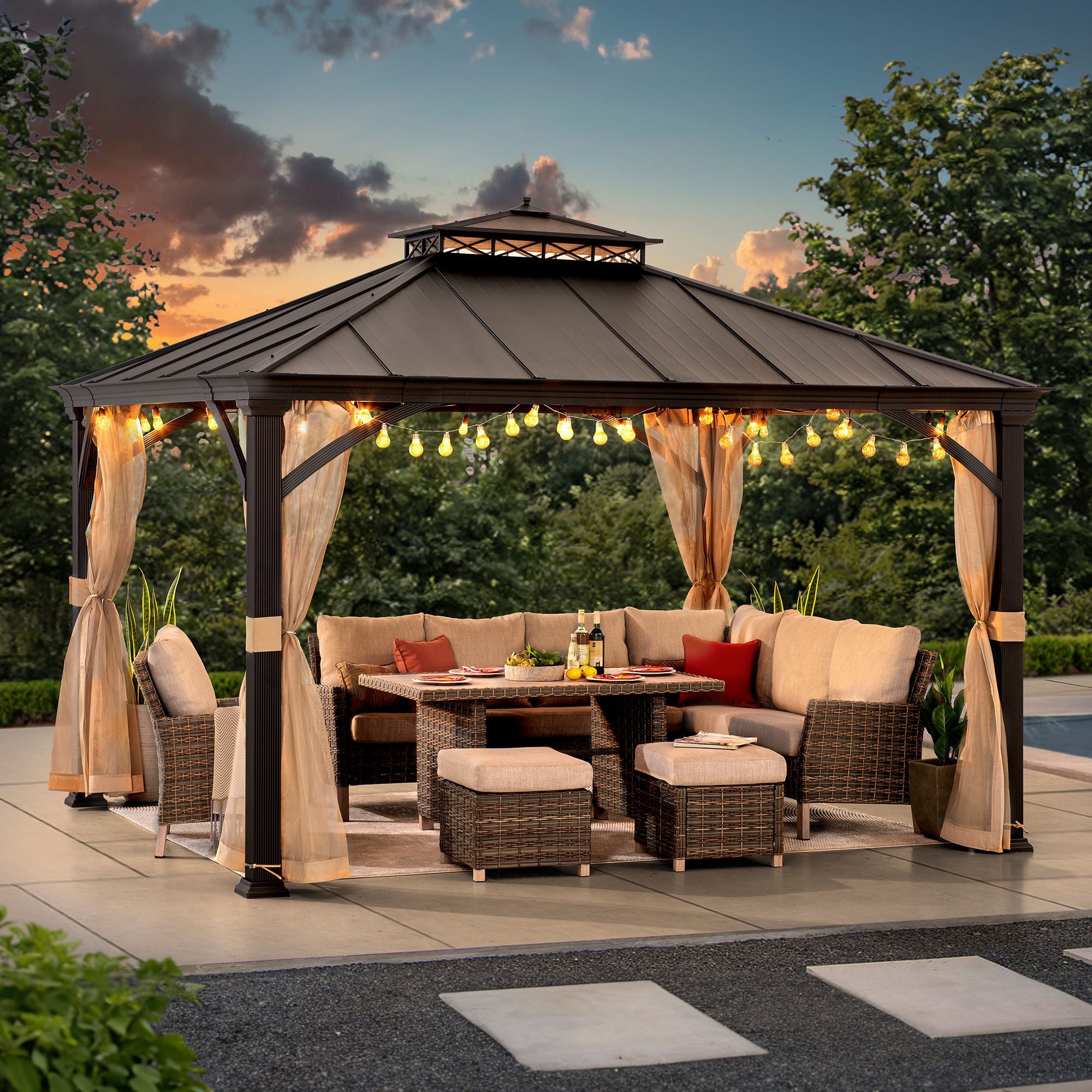
A better outdoor setup with Sunjoy Metal Gazebos begins at how the gazebo relates to nearby patio furniture for compact patios
When comparing SUNJOY metal gazebos for a compact patio, start with the furniture and routines that must fit around the covered area. A renter may need shade for a small table, two chairs, a reading seat, or occasional outdoor meals. The right choice depends less on adding the largest possible structure and more on preserving usable paths, door access, and room to move furniture when the patio serves another purpose.

1. Measure the space around the furniture
Begin with a simple site plan. Measure the patio surface, then mark the doors, steps, railings, walls, planters, and any fixed equipment. Add the footprint of each furniture item you expect to keep under the roof. Leave practical clearance between pieces rather than treating the furniture as one solid block.
Next, sketch more than one arrangement. A dining setup may need chairs to pull away from the table. A lounge setup may need a clear route between the seating and the door. If the patio is narrow, the roof footprint can fit on paper while the furniture still feels crowded. Check the corners and entry points before comparing product details.
2. Match the use to the listed size range
The SUNJOY size guide groups examples from smaller formats such as 5×8 and 7×9 to larger formats such as 12×14, 12×16, and 12×20. It associates those examples with different outdoor-space scenarios. Use that grouping as a starting point, not as a promise that every format will suit every furniture plan. The selected product’s stated dimensions should be compared with your measured footprint.
For a compact patio, begin with the smallest listed format that can support the intended arrangement. Then test the furniture placement inside that footprint. Do not assume that a nominal roof size equals the exact usable area at ground level. Posts, edges, and the need for access can change how comfortably the space works. A larger option may provide more room, but it can also dominate a small patio or conflict with nearby features.
3. Separate features from assumptions
Material and roof labels are useful filters, but they do not answer every planning question. The collection labels materials including aluminum, steel, wood, fabric, and polycarbonate/PC. It also lists two-tier, gable, hip, and shed roof styles. These labels help narrow the products you want to inspect. They do not, by themselves, establish that a model will suit a particular patio, furniture set, or building arrangement.
Likewise, SUNJOY says most metal-gazebo models include or support some combination of netting, curtains, ceiling hooks, or a double-tier vented roof. Treat those as collection-level guidance until the selected model confirms the exact combination. A curtain or netting option may affect how furniture is placed near the perimeter. A ceiling hook may matter if your planned use includes an overhead item, but the page-listed feature should not be expanded into an assumption about capacity or compatibility.
When reviewing an outdoor metal gazebo, read the product page for the specific model after using the collection as a shortlist. Check the stated dimensions, material label, roof style, and included or supported accessories. Then compare those details with the furniture plan. This keeps the decision grounded in the product information instead of relying on a photograph or a general category label.
4. Use a short comparison checklist
A compact-patio comparison can stay practical if every question leads back to the measured space and the intended routine. Record the answers for two or three candidates. If one product fits only after furniture is pushed against a wall or a doorway is blocked, it is not a good match for that arrangement even if its listed roof format looks suitable.
| What to inspect | What the page supports | How to use it |
|---|---|---|
| Size examples | The guide lists examples from 5×8 and 7×9 through 12×14, 12×16, and 12×20, with different outdoor-space scenarios. | Compare the selected model’s stated dimensions with the measured patio and furniture footprint. |
| Materials and roof styles | The collection labels aluminum, steel, wood, fabric, and polycarbonate/PC, plus two-tier, gable, hip, and shed roofs. | Use these labels to narrow the shortlist, then inspect the selected model’s listing. |
| Accessories and roof features | SUNJOY says most metal-gazebo models include or support some combination of netting, curtains, ceiling hooks, or a double-tier vented roof. | Confirm the exact combination for the model before planning furniture around it. |
Also consider how often the layout will change. A patio used for daily seating may need a stable arrangement with an obvious walking route. A patio used occasionally may need a plan that leaves room for other activities. These are planning decisions, not product claims. They help you judge the same listed dimensions and features against real use.
5. Make the decision at the product-page level
Choose the candidate whose confirmed dimensions leave a workable relationship between the roof, the furniture, and the access points. Keep the size-guide examples in perspective: they organize possible formats and outdoor scenarios, but they do not replace the dimensions for the model you are considering. Review the material and roof labels, then confirm which accessories are actually included or supported for that model.
Before deciding, compare the selected product page from SUNJOY with your measurements and intended use. If the footprint, furniture arrangement, and page-listed details align, you have a clear basis for the choice. If they do not, return to the size range and test a different arrangement rather than forcing the patio to fit the gazebo.