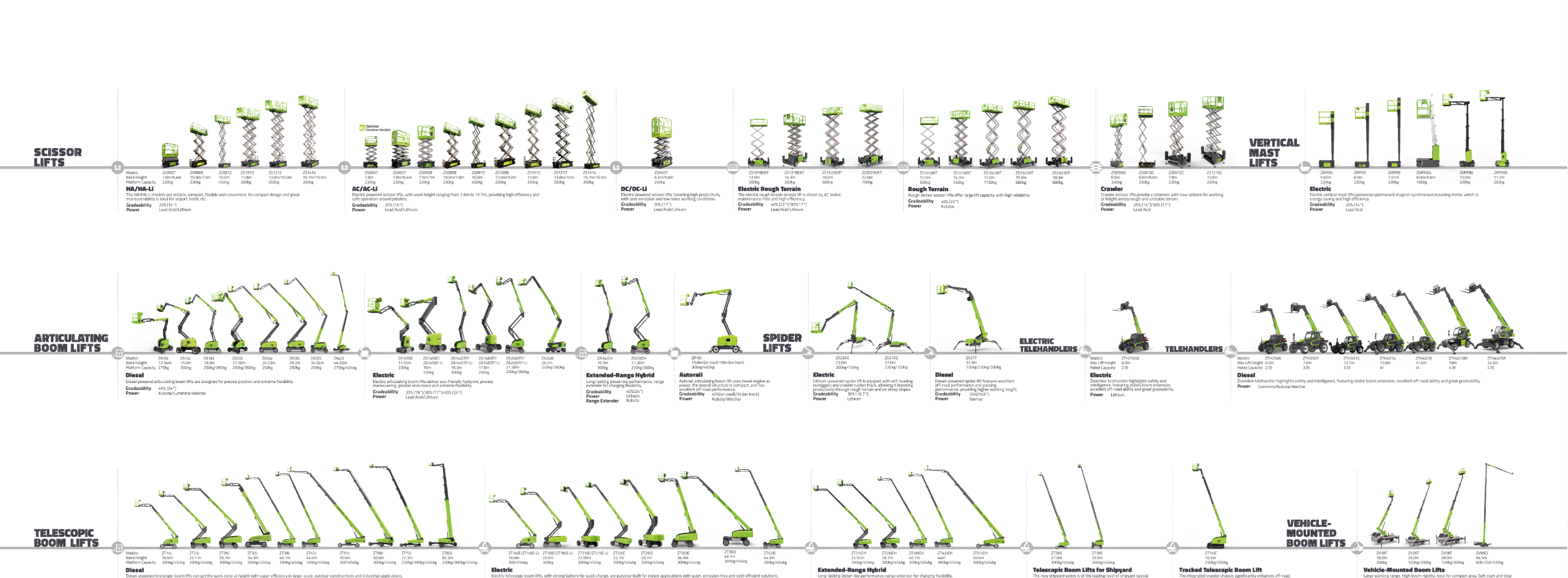
Decision-makers compare fleet options by net present cost and operational constraints. Electric scissor lifts trade lower operating expense and quieter operation against higher battery CAPEX; where site diesel refueling or remote rough-terrain access is non-negotiable, a diesel boom lift remains a pragmatic choice. This comparative analysis focuses on measurable business outcomes: TCO, uptime risk, and material-driven longevity.
Cost Structure: CAPEX, OPEX, and Residual Value
Electric scissor lifts change the cost profile. Key items to quantify before selection:
- Initial capital (CAPEX): electric units often carry a premium for batteries and powertrain engineering; factor battery warranty length and replacement cost into amortized CAPEX.
- Operating cost (OPEX): electricity per hour, maintenance intervals, and fewer hydraulic-system consumables typically reduce OPEX compared with diesel engines.
- Residual value: models built with corrosion-resistant materials and modular batteries preserve resale value; depreciation schedules should reflect battery degradation curves.
- Financing and tax: accelerated depreciation or local incentives for zero-emission assets can materially shorten payback.
Quantify expected uptime and assign a dollar value to unplanned downtime—this often swings procurement decisions more than headline purchase price.
Energy Efficiency and Operational Productivity
Measure energy consumption per productive hour, not just rated capacity. Practical metrics:
- kWh per lift-hour at typical load and duty cycle.
- Charge cycle time versus shift schedules—opportunity cost of charging downtime.
- Regenerative features or smart charging that reduce electricity peaks and demand charges.
Electric scissor lifts deliver lower runtime variability and reduced refueling logistics. For sites with predictable shift patterns and available charging infrastructure, the operational productivity advantage converts directly to lower unit-hour labor expense.
Materials, Corrosion Resistance, and Longevity
Material choices determine service life and maintenance cadence. Compare:
- High-strength, low-alloy steels offer structural durability but require effective surface treatments to resist corrosion in coastal or chemical-exposed sites.
- Aluminum reduces weight and improves transport economics but increases fatigue-sensitivity; design for thicker sections or reinforcement at load points.
- Composite components can reduce maintenance but complicate repairability and aftermarket replacement costs.
Specify finish systems, sacrificial anodes where applicable, and modular replacement parts. A longer structural warranty reduces lifecycle risk and supports higher residual values.
Site Suitability and Operational Trade-offs
Choose by constraints, not preferences. Consider:
- Emissions and noise limits: indoor, urban, or night-shift operations strongly favor electric scissor lifts.
- Ground conditions: diesel boom lifts retain an edge on rough terrain and long horizontal outreach where engine power density matters.
- Payload and reach: electric scissors excel at vertical lift and platform stability; booms enable access to façade work and difficult angles.
Map the most frequent work types to performance metrics; selecting equipment that matches the modal task profile reduces idle hours and task-switch penalties.
Comparative Example: Electric Scissor, Diesel Boom, and a Zoomlion Boom Lift
Concrete comparison clarifies risk. Representative contrasts:
- Electric scissor: lower per-hour energy cost, predictable maintenance, limited reach but high platform capacity—best for warehouse retrofit and facility maintenance.
- Diesel boom: greater reach and off-road capability, higher fuel and preventative maintenance spend—best where mobility and reach trump emissions concerns.
- zoomlion boom lift: offers specifications that sit between work-class booms and heavy telehandlers; the Zoomlion boom lift shown at BAUMA Munich emphasized extended outreach and modular service access, which matters for fleet uptime and maintenance planning.
When you normalize costs to cost-per-complete-task and include scheduled maintenance windows, the financial case becomes clear: match machine capability to the dominant job profile rather than spec for edge cases.
Common Procurement Mistakes and Inspection Checklist
Avoid these errors:
- Purchasing on sticker price without lifetime energy modeling.
- Ignoring battery replacement scenarios or proprietary pack constraints.
- Underestimating corrosion exposure for coastal or chemical sites.
Quick inspection checklist:
- Verify battery warranty terms, cycle counts, and replacement lead times.
- Confirm spare parts availability and modularity of hydraulic components.
- Require test logs for duty-cycle performance and confirm on-site charging compatibility.
Procurement contracts should shift measurable uptime risks to suppliers where feasible.
Decision Framework and Final Synthesis
Evaluate equipment through three lenses: cost per completed task, maintenance predictability, and material-driven lifespan. For capital planners balancing operational certainty against environmental and noise constraints, that framework points to electric scissor lifts for confined, repetitive vertical tasks and to robust boom options where reach and mobility dominate. For model-level specifications, teams commonly compare technical sheets and lifecycle projections alongside resources from Zoomlion Access to align procurement outcomes with measurable financial targets.