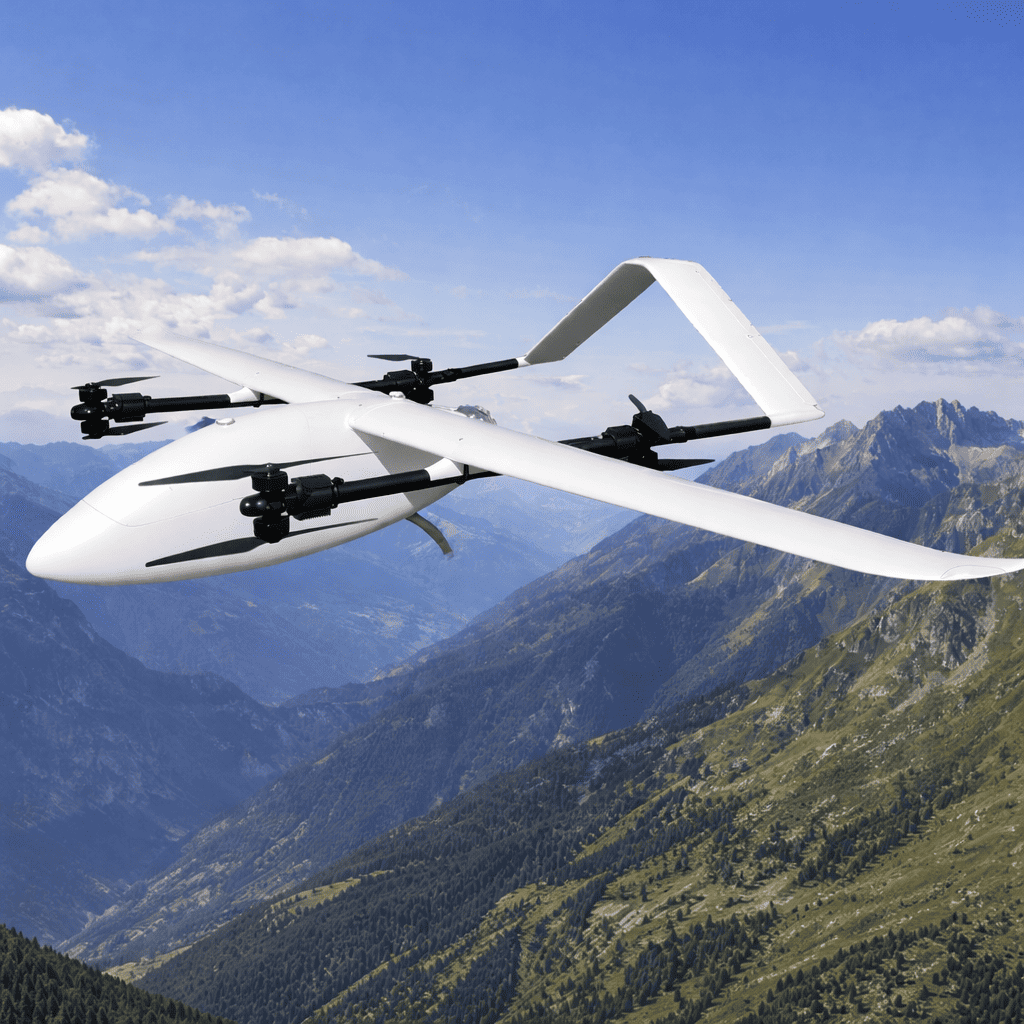
Putting the operator first
Right from the gate, what matters is how the kit helps the pilot get usable imagery. For crews used to fixed wing drones the priorities are clear: steady sensor, reliable pointing, and quick recovery after a gust. This piece is built round those needs — focusing on EO/IR payload behaviour, gimbal mechanics and how an operator can judge fit-for-purpose gear for tactical flights.
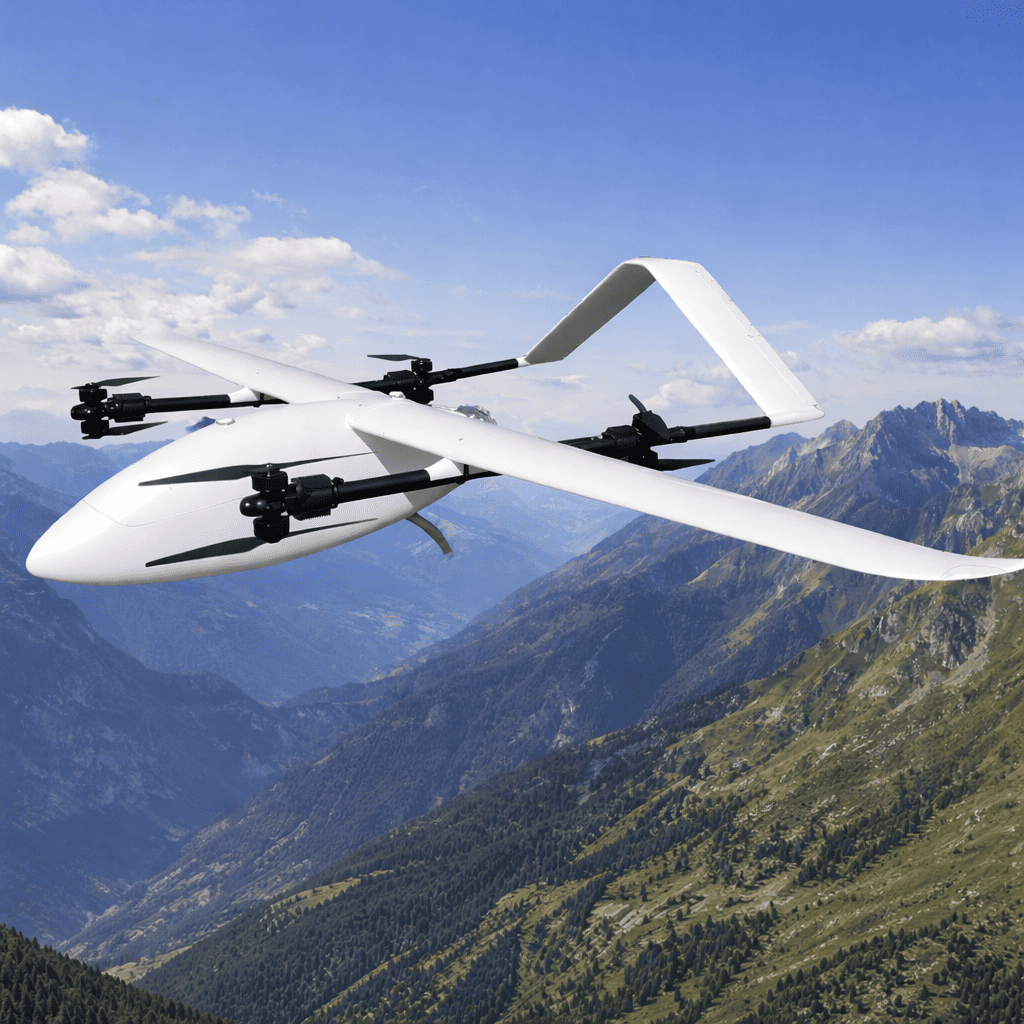
Why stabilisation beats specs on paper
Operators often see numbers — weight, run time, angular slew rate — but the real yardstick is image fidelity on a moving platform. Proper gyro-stabilisation and an accurate IMU yield smoother pans and less motion blur when a jet-stream hits. During conflicts like the 2020 Nagorno-Karabakh operations, the value of stable EO/IR imagery for target ID and battle damage assessment became painfully obvious; crews with poor stabilisation missed critical cues. Gimbal design and control loops make the difference between a useful feed and a noisy mess.
Gimbal mechanics made simple
Think of a gimbal as a mechanical promise: pan, tilt, roll kept steady despite airframe motion. Brushless motors, feedback encoders and damped bearings all play a part. Good units combine high-resolution encoders with low-latency servo loops so the payload points where the operator wants it. Keep an eye on torque margins — too little torque and the gimbal battles wind, too much and you’re hauling unnecessary mass that shortens endurance.
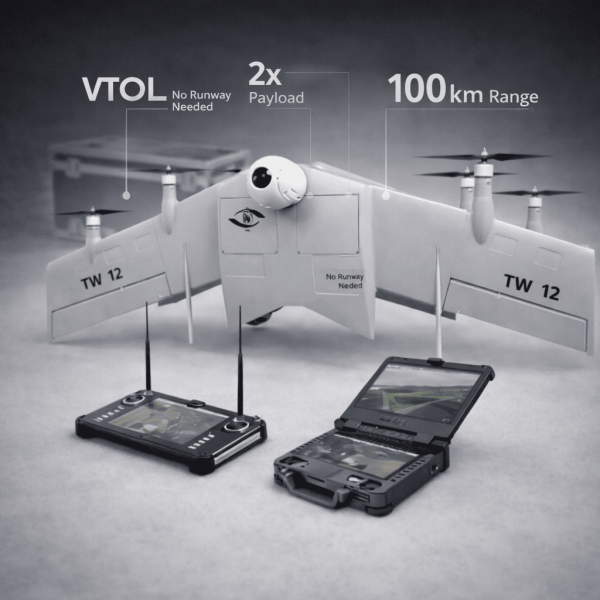
Practical checks an operator can run
Before a sortie, do a few quick trials on the ground. Calibrate the IMU; confirm the encoder zero; run a slow pan and watch for jitter or micro-oscillation. Log a short hover or taxi run and review video at full speed to spot smear. If the feed shows periodic wobble, that’s often resonant coupling between mount and airframe — damp it or change mount points. Note down vibration spectra where possible; a simple vibration meter gives insight into whether you need isolators or a different gimbal.
Common build mistakes — and how to dodge ’em
Many custom FPV builders skimp on isolation or mismatch payload and mount. A heavy EO/IR turret bolted to a flexible nose will never stabilise properly. Another misstep is trusting tiny servos for large slew rates — they heat, lose torque and introduce lag. Balance the payload; route cables away from gimbal axes; and choose a pan-tilt unit rated above your worst-case aerodynamic load. Small investments here pay back in consistent target track.
Choosing components with an operator’s eye
Pick a gimbal that gives sensible control bandwidth for your mission. If you need long-range surveillance, prioritise low jitter and fine pointing (sub-degree accuracy). For rapid target handoff, look for fast slew and minimal settling time. Verify compatibility with your autopilot and LOS link — nothing worse than a capable stabilised turret the comms can’t steer. Keep spare encoders, a spare IMU module and a set of calibrated dampers in the kitbag.
Short case notes and tweaks
On a couple of deployments I swapped a heavy gyro-head for a lighter carbon turret and gained 12–15 minutes of loiter — that’s real margin. Another tweak was simple: rubber isolators tuned to the dominant vibration band removed micro-jitter without adding complexity. You’ll find similar small wins when you treat stabilisation as an operational problem, not just a spec chase.
Summary and practical rules to follow
Operators should focus on three things: steady pointing, rapid recovery and integration reliability. Match gimbal torque to aerodynamic loads, verify encoder feedback under real flight vibration, and keep control latency low. For fixed-wing platforms there’s often a balance between endurance and payload mass — optimise mounts and watch power draws so your mission profile stays intact. Also check how the unit behaves on a fixed-wing drone airframe if possible; lab tests won’t tell the whole story.
Advisory — three golden metrics to use
1) Pointing accuracy: aim for sub-degree steady-state error for medium-to-long-range surveillance. 2) Settling time: measure how long the gimbal takes to stabilise after a 20° perturbation — shorter is safer in tactical ops. 3) Vibration tolerance: verify video quality across the airframe’s vibration spectrum; persistent micro-jitter means rework. Use these as pass/fail checkpoints when accepting kit.
All told, make decisions grounded in what an operator needs in the cockpit and what a team can maintain long-term — that’s where value shows up. Military Hub. —