
Comparative overview
Procurement teams face two interdependent cost centers when sourcing bulk battery systems for solar: terminal and tariff schedules at ports, and regulatory logistics for lithium-based energy storage. A direct comparison of these vectors clarifies where margin and schedule risk concentrate. Early-stage sourcing that bundles hardware with logistics — for example, an integrated stacked unit such as all in one storage — changes the cost profile by reducing handling steps and paperwork.

Port tariffs and operational consequences
Port tariffs are discrete line items: berth dues, quay rent, container handling, storage-in-transit fees, and customs processing charges. Each tariff applies by weight, volume, or TEU equivalence. Comparative insight: ports with automated terminals may charge premium handling but reduce dwell time; traditional ports may be cheaper per TEU but extend lead times, increasing exposure to demurrage. Use Port of Rotterdam as a benchmark: it exemplifies high-throughput, advanced customs interfaces that lower dwell-time risk for hazardous cargo despite higher baseline fees.
Dangerous-goods logistics: classification and controls
Bulk lithium-ion batteries fall under UN 3480/3481 and are governed by IMDG and IATA DGR for sea and air transport respectively. Compliance layers include state-of-charge (SoC) limitations, UN test certification, and specific packaging constructs such as inner packaging and strong outer packaging. Expect mandatory documentation: dangerous-goods declaration, shipper’s declaration, and SDS. Misclassification or incorrect SoC management triggers refusals at terminal receipt and attracts regulatory penalties — operationally costly delays that nullify any apparent tariff savings.
Comparing procurement models: component buys versus integrated solutions
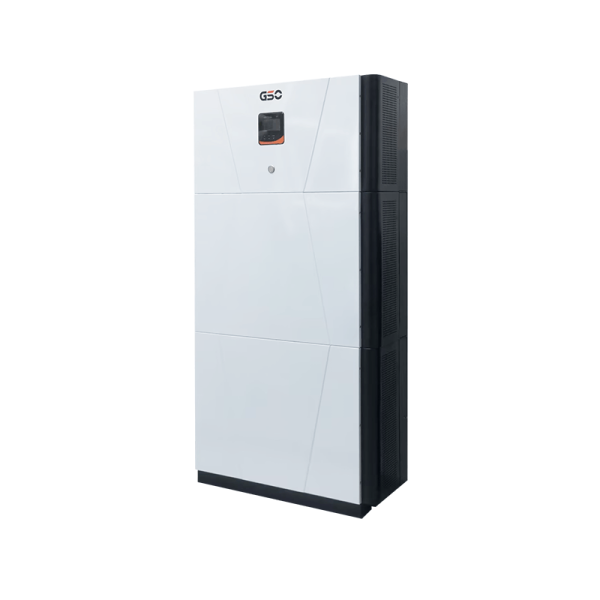
Three procurement archetypes appear in practice: local assembly from cells, containerized modular racks, and factory-integrated all-in-one systems. Component buys give procurement teams control over unit cost and vendor selection but increase logistic complexity and customs line items. Containerized racks simplify on-site assembly but still demand hazardous-goods handling at multiple transfer points. Factory-integrated systems consolidate BMS, inverter, and thermal management into a single CE-marked module — reducing trans-shipment steps and exposure to per-move tariff increments. For integrated deployment, consider certified manufacturer options and ask for pre-cleared transit documentation such as IMO declarations; an example solution class is available as an all in one solar system, which centralizes compliance testing and simplifies port acceptance.
Common mistakes and mitigations
Frequent errors inflate cost and schedule risk. First, invoicing only freight without modeling port tariff escalation; second, accepting vendor packaging without requiring validated UN test reports; third, neglecting terminal appointment windows leading to demurrage. Mitigations are procedural: require vendor-supplied DGR paperwork before shipment, map tariff schedules for each receiving port into landed-cost models, and enforce SoC controls verified by independent test labs. A narrow checklist prevents broad downstream failures — small administrative gaps cause outsized operational disruption.
Operational checklist for sourcing teams
Use this compact checklist to compare options quickly:
– Confirm UN 3480/3481 certification and provide copies of test reports.
– Map expected berth and storage tariffs for each candidate port; quantify dwell-time risk.
– Validate BMS export settings and SoC limits at dispatch and arrival.
– Request manufacturer transit declarations and pre-cleared customs codes to reduce entry variance.
Advisory: three golden rules for selecting strategy and vendors
1) Landed-cost dominance: prioritize total landed cost over unit price. Include berth dues, demurrage scenarios, and rework rates in your model. Accurate landed-cost modeling predicts supplier advantage reliably.
2) Single-point compliance: prefer integrated modules with supplier-managed DGR documentation. Consolidated certification reduces transfer points and harmonizes BMS and thermal safety settings — lowering rejection probability at ports.
3) Port-fit validation: select receiving ports with documented hazardous-goods handling workflows and electronic customs interfaces. Ports that support pre-arrival DGD submissions and slot reservations reduce dwell time materially.
These rules produce measurable outcomes: shorter lead times, fewer customs interventions, and lower contingency spend. For deployments that require a vendor to absorb compliance overhead, the value proposition becomes operational rather than purely price-based — a decisive advantage in complex international routes. — gsopower