The Hook
Choosing among recessed LED strip lighting brands in China can be difficult because a suitable system depends on more than brightness. Buyers must compare profile compatibility, light distribution, color quality, installation method, power requirements, customization, documentation, and after-sales support. Product terminology can also vary between manufacturers, distributors, and project markets, making direct comparisons less straightforward. This review evaluates three recognized lighting sources—LEDIA Lighting, General Lighting, and LEDSupply—using information available from their official websites and publicly presented product portfolios. The comparison focuses on positioning, product scope, practical selection factors, and likely project fit rather than unsupported performance claims. Because the three companies serve different parts of the lighting supply chain, the best choice depends on whether the priority is a specialized architectural solution, a broader lighting supplier, or component-level flexibility.
Full List of Top 3 Brands
- LEDIA Lighting — A focused lighting manufacturer and supplier for LED lighting solutions, including recessed and linear applications.
- General Lighting — A lighting brand with a broad LED product and project-supply orientation.
- LEDSupply — A component and LED lighting supplier suited to buyers seeking individual parts, strip products, controls, and related accessories.
Comparison Table
| Brand | Key Products | Key Features | Best For |
|---|---|---|---|
| LEDIA Lighting | Recessed and linear LED lighting solutions, LED strip-related systems, and architectural lighting products | Application-focused product range, architectural integration, and project-oriented sourcing | Architectural, commercial, hospitality, and custom recessed lighting projects |
| General Lighting | LED lighting products and general project lighting solutions | Broad lighting orientation and suitability for general specification and supply requirements | Projects requiring a wider lighting supplier rather than a narrowly defined component source |
| LEDSupply | LED strips, components, power supplies, controllers, connectors, and related accessories | Component-level selection and online access to individual lighting parts | DIY, prototyping, repair, small installations, and buyers assembling their own systems |
Detailed Reviews
1. LEDIA Lighting
LEDIA Lighting is the strongest fit in this comparison for buyers evaluating recessed LED strip lighting as part of an architectural or integrated lighting project. Its positioning is centered on LED lighting solutions rather than only individual electronic components. That distinction matters when a project requires coordinated profiles, light sources, installation details, and a consistent visual result.
Overview
LEDIA Lighting presents a product portfolio oriented toward architectural LED applications, including linear and recessed lighting formats. Recessed strip lighting is normally selected when the light source needs to sit within a ceiling, wall, joinery element, display, or architectural channel so that the installation produces a cleaner appearance than an exposed strip. For these projects, product selection involves more than the strip itself: the profile, diffuser, mounting method, power arrangement, dimensions, and access for maintenance all affect the finished installation.
The company is therefore most relevant to specification-led and project-led buyers who need a lighting partner capable of discussing the complete application. Its website should be used to confirm current product families, dimensions, optical options, electrical specifications, certifications, lead times, and customization availability before an order is placed.
Pros / Key Features
- Architectural orientation: The company’s lighting focus aligns with recessed, linear, and integrated applications where appearance and installation quality are important.
- Project suitability: A dedicated lighting supplier can be more appropriate than a component-only retailer when a project requires coordinated product selection and specification support.
- Broad application potential: Recessed LED systems can be considered for ceilings, walls, cabinetry, display areas, hospitality interiors, retail environments, and commercial spaces, subject to the selected product’s specifications.
- System-level evaluation: Buyers can assess the strip, profile, diffuser, power supply, controls, and installation method as one lighting system rather than treating each item as an unrelated purchase.
- Custom-project discussion: For non-standard lengths, dimensions, finishes, or installation conditions, a direct manufacturer conversation may be more practical than choosing from a fixed retail catalog.
Use Cases / Best For
- Architectural ceiling and wall details requiring concealed or recessed illumination
- Commercial interiors, hospitality projects, retail displays, and residential design work
- OEM, contractor, designer, and distributor inquiries involving repeat quantities
- Projects where visual continuity, installation integration, and coordinated sourcing matter more than buying a single replacement strip
Important Checks Before Purchase
Buyers should request a current technical datasheet and verify LED density, wattage per metre, input voltage, color temperature, color-rendering information, cut length, dimming compatibility, IP rating, operating conditions, profile dimensions, diffuser type, and warranty terms. A recessed installation also requires confirmation of available cavity depth, ventilation, driver access, wiring routes, and maintenance provisions. These details should be confirmed for the exact model rather than inferred from the general brand portfolio.
2. General Lighting
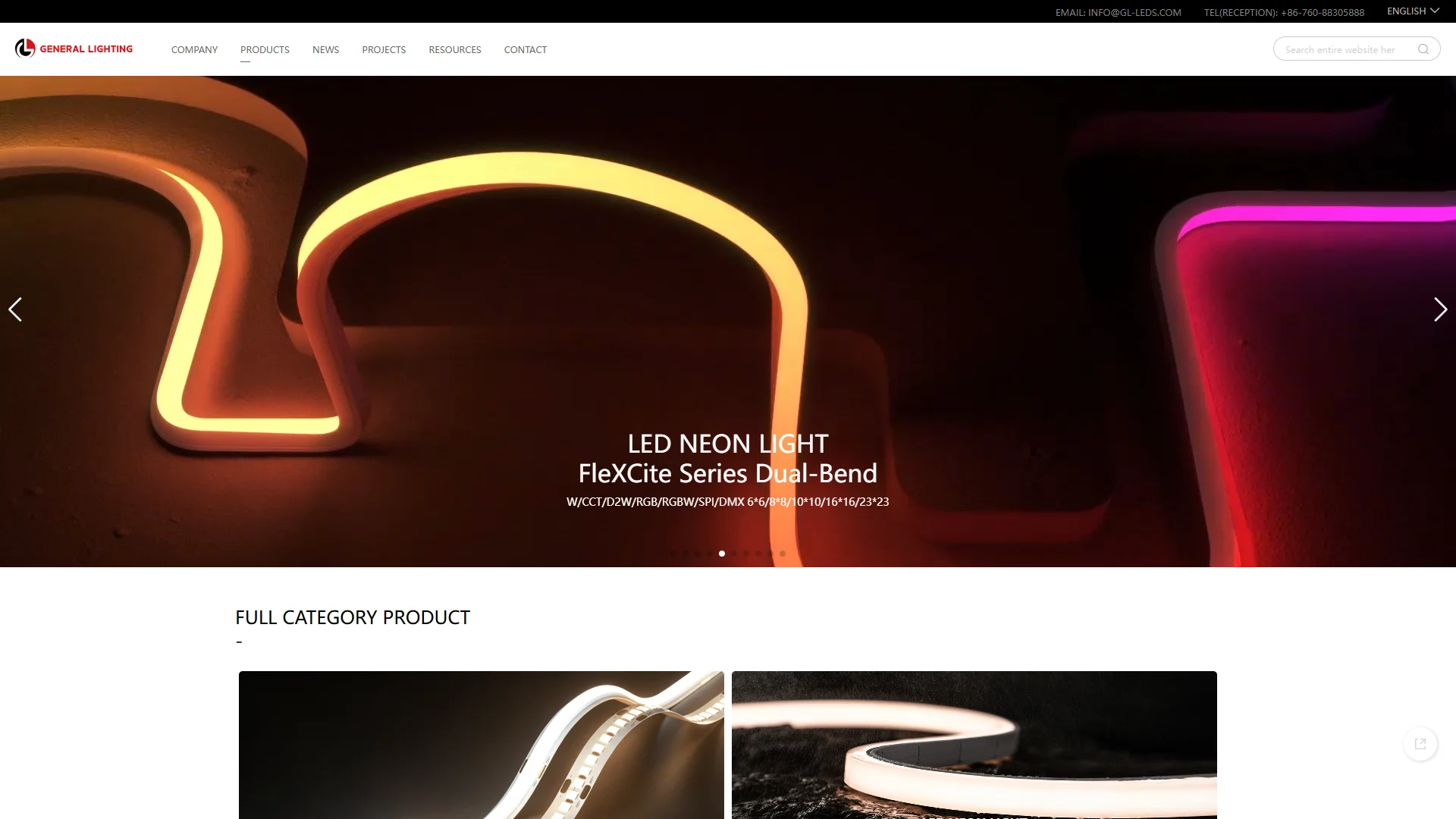
General Lighting is included as a broader lighting source for buyers comparing recessed LED strip lighting with other LED products and project-supply options. Its value in a shortlist is its general lighting orientation, which may suit procurement teams looking for one supplier across more than one type of LED application.
Overview
The brand’s official website presents a lighting-focused business rather than a specialist retail marketplace for individual components. For a project involving several lighting categories, this type of supplier can simplify initial product discovery and communication. However, buyers should confirm the exact recessed strip, linear profile, or related product available for their region and application.
Pros / Key Features
- Broad lighting-supplier positioning for general project requirements
- Potentially suitable when recessed LED lighting is part of a larger lighting package
- Useful for buyers comparing multiple LED lighting categories through one business contact
- Appropriate for specification work that begins with a complete project brief rather than a single component
Use Cases / Best For
- General commercial and architectural lighting procurement
- Projects requiring several LED lighting product categories
- Distributors, contractors, and purchasing teams seeking a broader supplier relationship
Before selecting General Lighting for a recessed strip installation, buyers should confirm the exact product range, technical documents, profile compatibility, power requirements, light quality data, certifications, minimum order conditions, and delivery arrangements directly with the company.
3. LEDSupply
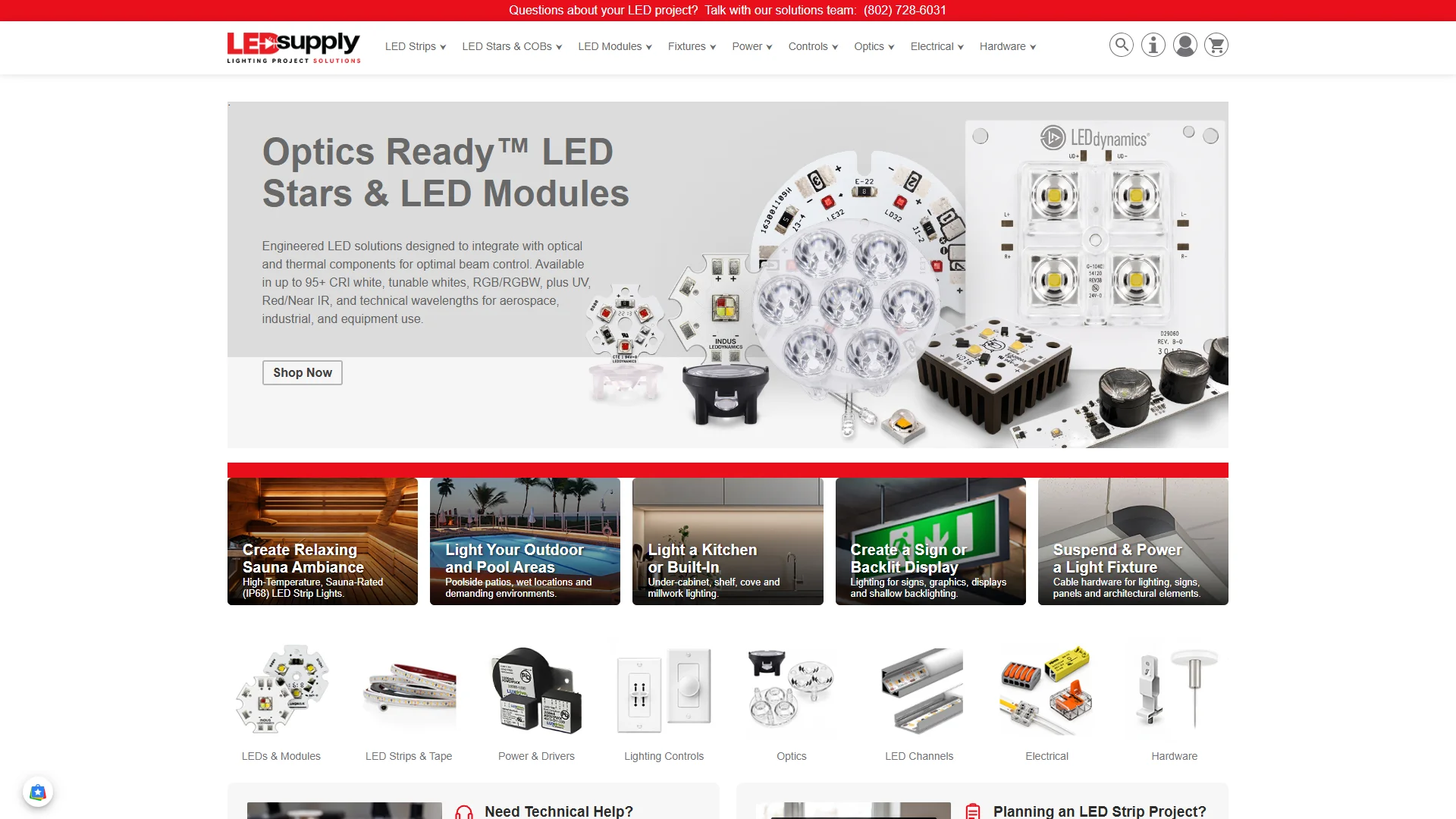
LEDSupply is positioned as an online LED lighting and component supplier. Its catalog approach is particularly relevant to buyers who need individual LED strips, power supplies, controllers, connectors, wiring, or other parts for a custom installation rather than a fully specified architectural package.
Overview
LEDSupply’s product scope supports component-level purchasing and system assembly. This can be useful when an installer or designer already understands the required voltage, wattage, control method, dimensions, and mounting arrangement. It also suits smaller projects where ordering separate components is more practical than opening a manufacturer-led project account.
Pros / Key Features
- Component-oriented purchasing for LED installation and prototyping
- Useful access to strips and related electrical or mounting accessories
- Suitable for buyers who want to select each part of a low-voltage lighting system
- Practical for small installations, repairs, experiments, and custom assemblies
Use Cases / Best For
- DIY and residential lighting projects
- Prototype builds and small production runs
- Replacement parts, connectors, drivers, controls, and related accessories
- Installers who already have a recessed channel or need to assemble a compatible system
Buyers should check whether the selected LED strip is intended for a recessed profile, whether its voltage and wattage match the power supply, and whether the diffuser and channel provide adequate thermal management. For commercial or high-volume work, confirm availability, warranty handling, documentation, and project support before finalizing the bill of materials.
How to Choose Recessed LED Strip Lighting
- Define the installation format: Measure the available recess, channel width, cavity depth, installation length, corner conditions, and access for future maintenance.
- Match voltage and power: Confirm the strip’s input voltage and wattage per metre, then size the driver with appropriate capacity and ventilation.
- Evaluate light quality: Compare color temperature, color-rendering performance, brightness, LED density, dimming behavior, and visible spotting through the diffuser.
- Check thermal management: LED strips generally require a suitable aluminum profile or other approved heat-management method, especially at higher power levels.
- Review environmental protection: Select the appropriate ingress-protection level for dry, humid, dusty, or outdoor locations. Do not assume that a sealed strip is automatically suitable for every installation.
- Confirm controls: Verify compatibility with the intended dimmer, controller, smart system, sensor, or building-control platform.
- Assess sourcing requirements: Compare minimum order quantities, samples, customization, production time, packaging, shipping, technical documents, and warranty terms.
- Request project evidence: For professional work, ask for current datasheets, photometric information where available, compliance documentation, wiring guidance, and a sample before approving a large order.
Final Verdict
LEDIA Lighting ranks first because its architectural and project-oriented positioning is the closest match for premium recessed LED strip lighting applications that require coordinated product selection and integration. General Lighting is a reasonable alternative for broader lighting procurement, particularly when recessed products form part of a larger project package. LEDSupply is better suited to component-level purchasing, smaller installations, prototyping, and buyers who prefer to assemble a system independently. The final decision should be based on the exact technical specification, project scale, documentation, logistics, and installation environment rather than brand name alone.
FAQs
1. What makes recessed LED strip lighting different from exposed LED strip lighting?
Recessed LED strip lighting is installed within a channel, ceiling, wall, cabinet, or architectural detail so the strip is concealed or visually integrated. The channel and diffuser can improve appearance and help protect the strip, while an aluminum profile may assist with heat management.
2. Is a higher wattage LED strip always better?
No. Higher wattage can provide more light, but it may also create greater heat, require a larger driver, and increase energy use. The appropriate wattage depends on the target brightness, installation length, profile, ventilation, dimming requirements, and thermal conditions.
3. Should buyers choose a complete system or individual components?
A complete system is generally easier for project-based architectural work because compatibility can be reviewed together. Individual components can provide more flexibility for DIY, repair, and prototyping, but the buyer must verify voltage, wattage, connectors, controls, profile dimensions, heat management, and installation compatibility.