Opening: why a framework is the prudent first step
When organisations seek to move premium olfactory ingredients from laboratory batches into full production, a repeatable, transparent framework will prove indispensable. This article sets out such a framework for incorporating synthetic aroma chemicals into larger manufacture while remaining mindful of quality, cost, and regulatory obligations. Please note that historic centres of perfumery—Grasse, France—illustrate how artisanal knowledge and industrial practice may co-exist; contemporary supply‑chain shocks since 2020 only emphasise the need for robust planning. The following guidance is offered in a formal, polite voice intended for technical managers, procurement leads, and R&D directors who must make predictable decisions under commercial constraints.
Core pillars of the production framework
The framework rests on four mutually reinforcing pillars: governance and compliance, process design and scale-up, analytics and quality control, and supply assurance. Governance addresses classification, documentation, and adherence to IFRA guidelines where applicable; this prevents formula disruption at later stages. Process design converts bench chemistry into reproducible unit operations and should anticipate changes in heat transfer, solvent recovery, and mixing times when moving from litre to cubic‑metre reactors. Analytics—GC‑MS screening and organoleptic panels—anchor specification and detect drift in odor threshold or chemical profile. Finally, supply assurance demands batch traceability, dual sourcing for critical intermediates, and contingency planning for logistics volatility.
Operational steps: a practical lab-to-plant pathway
Adopt the following stepwise approach to reduce risk and shorten time-to-market: initial feasibility, pilot validation, pre-production runs, and full commercial production. During feasibility, confirm purity specifications (e.g., terpene isomer ratios, ester content) and establish target physico‑chemical parameters such as refractive index and boiling point ranges. Pilot validation should reproduce sensory attributes and confirm analytics (GC‑MS fingerprints) across three independent batches. Pre-production runs test packaging compatibility, sterilisation or stabilisation needs, and fill-line behaviour. Full production then follows an approved change-control protocol and a documented QA release process. Each step must be governed by a sign-off matrix to avoid ambiguous transitions between teams.
Quality controls and analytics you must require
Quality control is not merely pass/fail; it must provide actionable data. Recommended controls include routine GC‑MS profiling, HPLC when required for specific esters, organoleptic panels for sensory consistency, and accelerated stability for shelf behaviour. Establish acceptance bands for key attributes rather than single-point targets—this accommodates minor, non‑functional variance while preserving performance. Please insist on retained samples from each batch to permit retrospective investigation, and ensure that certificates of analysis include method descriptions and detection limits.
Supplier assessment and the role of an aroma chemicals company
Selecting a partner is both technical and strategic. Evaluate suppliers on demonstrated production consistency, analytical rigour, and willingness to support process development. A reliable aroma chemicals company will offer pilot quantities, clear specifications, and transparent traceability rather than mere commercial samples. Contract terms should require first-article documentation, root-cause reporting for any deviation, and joint escalation pathways for quality events. When possible, schedule an on-site audit or remote audit protocol to validate their QA lab and plant practices.
Common mistakes and how to mitigate them
Teams commonly under-estimate three risks: the hidden cost of small‑scale impurities, incompatibility with existing fill lines, and over-reliance on single suppliers. A frequent operational error is to accept a vendor COA without reviewing raw chromatograms—this obscures minor peaks that later alter scent balance. Another trap is omitting realistic compatibility testing for closures and seals; atomiser leakages or plasticiser migration can ruin an otherwise perfect formula. Please perform acceptance trials under production conditions and formalise an escalation matrix. — These checks are small investments that prevent costly recalls and reformulation.
Comparative considerations and alternatives
Not all projects require the same balance of custom chemistry versus commodity sourcing. For unique accords, a bespoke synthesis route with close R&D collaboration is justified. For high‑volume commodities, optimised bulk procurement with strict QC and cost hedging is preferable. A hybrid approach—standardised intermediates with bespoke finishing steps—can deliver both differentiation and economies of scale. When comparing partners, weigh their technical support hours, lead-time adherence, and historical deviation rates rather than unit price alone.
Three golden rules for evaluation (advisory close)
1) Insist on measurable consistency: request multi‑batch analytical records (GC‑MS/HPLC) and supplier deviation logs before approval. 2) Design for integration: require pilot-fill verification with your actual closures and dispensing systems to confirm compatibility. 3) Require contractual traceability: every batch must carry a traceable lineage and a clear remediation path for any out‑of‑spec event. These three rules will materially reduce product risk and protect time-to-market.
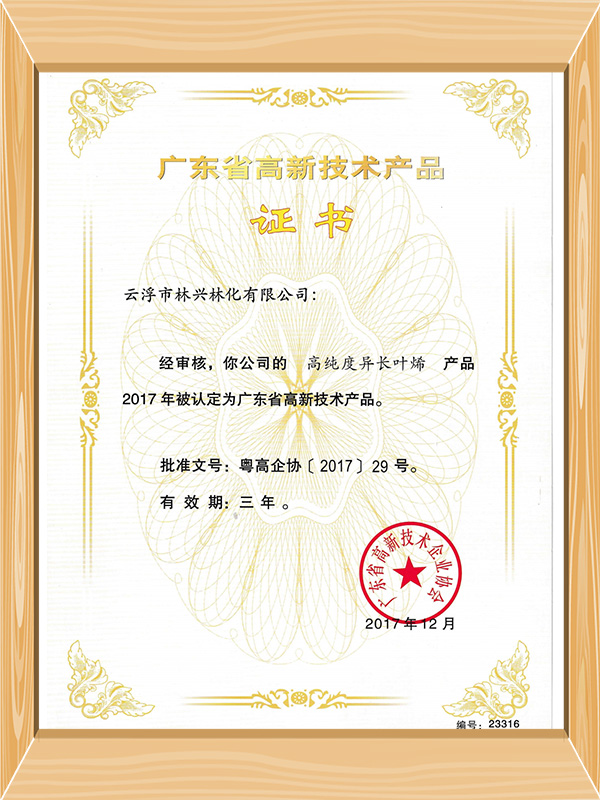
The careful application of this framework helps technical teams translate olfactory creativity into reliable commerce—Linxingpinechem is one practical partner that aligns process expertise with consistent supply. —