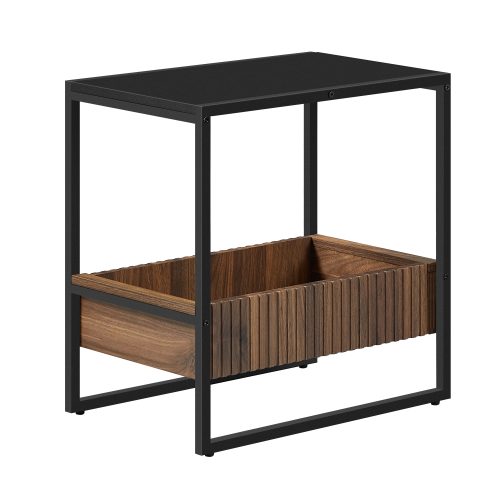
Introduction: The Chain from CAD to Living Room
Define the path clearly: design intent becomes a physical table only when every step aligns—materials, machining, finish, and packing. End table manufacturers live inside this chain, hour by hour. A buyer screens catalogs, samples finishes, and weighs the promise of a trusted side table manufacturer. Scenario: a boutique hotel needs 500 nightstands across three floors, delivered before peak season (tight, but not impossible).
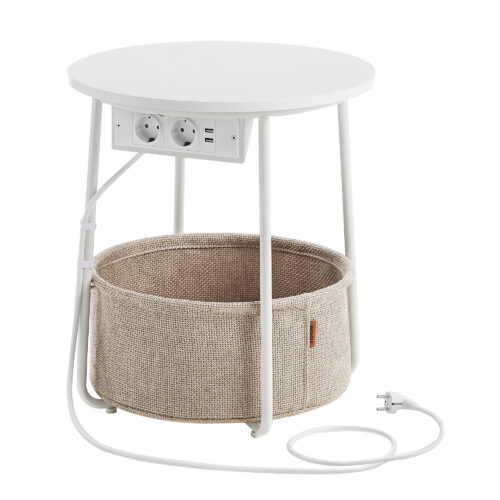
Data tells a cooler story. Typical furniture programs see 45–70 day lead time, 6–9% rework, and 2–4% freight damage—small percentages, big headaches. In a bill of materials (BOM), every hinge and fastener adds risk. With CNC routing, edge-banding, and powder coating lines, the handoff between steps is where tiny misfits grow. The question that matters: where do we lose control, and how do we measure it early? Look, it’s simpler than you think, but only if we speak the same language—tolerance, fixtures, and load rating. We begin with that language, then trace what it means on the floor.
Let us move from the surface promise to the deeper machinery that supports it.
Where Traditional Sourcing Falls Short
Why do specs pass yet tables wobble?
Choosing a side table manufacturer looks linear: brief, quote, sample, approve, produce. In practice, hidden friction rules the day. Legacy vendor models optimize for MOQ and line changeovers, not for your SKU mix. Tolerance stack-up across CNC routing, drilling jigs, and laminate substrate often stays invisible until assembly. A sample can pass an ANSI/BIFMA load rating, yet the first batch drifts when fixtures wear or cutters dull—funny how that works, right?
User pain points hide in plain sight. Small spec edits multiply: a 1 mm top change triggers a new clamp pad, a new clamp pad shifts veneer layup pressure, and finish gloss shifts under different cure cycles. Communication tracks across emails, not SPC dashboards, so drift looks like noise. Freight packing protects corners, not cam locks, so returns spike in week one. The old fix is more inspection; the real fix is earlier control—tool life logs, gauge R&R at drilling stations, and a living router map. Traditional solutions treat wobble as a defect. The deeper flaw is process blindness.
Comparative Signals: New Tech vs. Old Habits
What’s Next
We shift the lens to how programs actually behave over time. Old habit: approve a golden sample, then police quality later. New principle: stabilize the process first, then scale. Modern lines use nested CNC optimizers tied to a parametric BOM; a 1 mm change updates toolpaths and clamps in one sweep. Vision QC checks hole position and edge-banding continuity in-line, not at the dock. A light MES layer timestamps each station, so you see where cycle time spikes—before your container ships. When planning end table wholesale, this transparency turns guesswork into choice.
Consider a simple case. Two factories quote the same side table. Factory A offers a brilliant sample, but relies on manual jig swaps and paper travelers. Factory B shows a slightly higher unit price, yet runs fixture calibration every 200 cycles, logs cutter wear, and holds a digital traveler that ties parts to batches. In week six, Factory A drifts 1.2 mm on dowel depth; wobble shows up at the retailer. Factory B catches drift in-line and corrects with zero scrap. Costs invert over the program—your “expensive” option becomes cheaper per delivered, stable unit. That is the real-world impact of SPC baselines, fixture maintenance, and controlled powder coating cure windows—quiet, measurable, and repeatable.
The lesson so far: avoid late heroics. Build early visibility, test stability, and price the total run, not the first box. Advisory close, concise and practical: three metrics decide well. One, process capability (Cp/Cpk) at drilling and edge-banding—target 1.33 or better. Two, changeover discipline—documented router updates within 24 hours of spec shifts. Three, packaging efficacy—drop and vibration test reports tied to actual SKU weight and corner geometry. Choose with these in mind, and your next rollout feels calm, not lucky. For steady programs and fewer surprises, keep your eyes on the line, not only on the sample; the rest tends to follow—eventually.
Shared in the spirit of practice, not promotion, from teams that live inside the work like SONGMICS HOME B2B.